
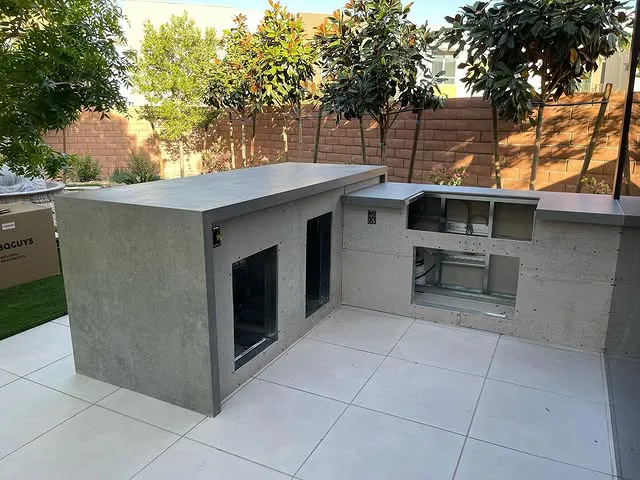
Granite Countertops in Las Vegas: Everything You Need to Know
Granite countertops remain one of the most popular choices for Las Vegas homeowners seeking to upgrade their kitchens and bathrooms. The combination of natural beauty, exceptional durability, and timeless appeal makes granite a reliable investment for your home. However, with various grades, colors, patterns, and price points available, understanding what to look for before making a purchase is essential.
Granite countertop costs in Las Vegas typically range from $40 to $200+ per square foot depending on the grade, with installation labor adding another $35 to $70 per square foot. These prices vary based on factors like slab thickness, edge profiles, and the complexity of your project. Knowing these cost factors helps you set a realistic budget and avoid unexpected expenses.
This guide covers everything you need to know about selecting, purchasing, and maintaining granite countertops in Las Vegas. You’ll learn about different granite types, how granite compares to other materials, what questions to ask installers, and current design trends that work well in Las Vegas homes.
Free Estimate
Get a free estimate for quartz countertops, granite and marble countertops, slab shower walls, and custom stone fabrication in Las Vegas. Our team will review your project, answer your questions, and recommend the best options for your space, style, and budget.
Granite Countertops in Las Vegas: Key Benefits and Value
Granite countertops offer Las Vegas homeowners a combination of natural beauty, practical performance, and financial return that few other materials can match. These natural stone surfaces handle the demands of daily kitchen use while adding aesthetic appeal to your home.
Why Choose Granite Countertops in Las Vegas
Granite stands out as a natural stone choice for your kitchen countertops because each slab contains unique patterns and colors formed over millions of years. You won’t find two identical granite slabs, which means your countertops will have a one-of-a-kind appearance.
The material performs well in Las Vegas homes where kitchens see frequent use. You can place hot pots and pans directly on granite surfaces without causing damage, unlike laminate or some synthetic options. The stone resists scratches from knives and daily food preparation activities.
Granite countertops in Las Vegas come in numerous colors ranging from neutral beiges and grays to bold blues, reds, and greens. This variety allows you to match your existing kitchen design or create a new focal point. You can also select from different finishes, with polished granite offering a glossy look and honed granite providing a matte surface.
Durability and Longevity of Granite
Granite ranks as one of the hardest natural materials used in residential construction. Your granite countertops will maintain their appearance and function for decades when properly maintained.
The stone’s dense composition makes it resistant to chips and cracks under normal use. While extremely heavy impacts can damage granite, regular kitchen activities won’t compromise its integrity. You’ll find that granite handles the wear from meal preparation, serving, and cleanup without showing signs of deterioration.
Maintenance requirements remain minimal:
- Clean with mild soap and water
- Reseal every 1-2 years to maintain stain resistance
- Avoid harsh chemical cleaners that can break down the sealant
Your kitchen countertops will need resealing periodically to keep them protected from stains and moisture absorption. This simple process takes little time and preserves the stone’s performance characteristics for years.
How Granite Boosts Home Value
Installing granite countertops in Las Vegas increases your property’s market appeal and resale value. Buyers actively look for homes with quality kitchen features, and granite signals an upgraded space.
Real estate professionals recognize granite as a premium material that justifies higher asking prices. Your investment in granite countertops typically returns 80-100% of the installation cost when you sell your home. Kitchen countertops rank among the first features potential buyers notice during property viewings.
The material’s reputation for durability reassures buyers that they won’t need immediate replacements or repairs. Unlike trendy materials that may look dated within a few years, granite maintains its appeal across changing design preferences. You benefit from both immediate enjoyment and long-term financial value when you choose granite for your Las Vegas home.
Types and Styles of Granite Countertops
Granite offers multiple installation formats, an extensive color palette, various edge treatments, and modern design features that can transform your Las Vegas kitchen or bathroom. Understanding these options helps you select countertops that match both your aesthetic preferences and functional requirements.
Granite Slab vs. Granite Tile
Granite slabs are large, continuous pieces cut directly from quarried stone, typically measuring 9 to 10 feet in length. When you choose slabs for your granite kitchen countertops, you get fewer visible seams and a more uniform appearance across your surfaces. The installation requires professional fabrication and precise measurements.
Granite tile comes in smaller, pre-cut squares or rectangles, usually 12×12 inches or 18×18 inches. This option costs less upfront and allows for easier DIY installation. However, you’ll have multiple grout lines throughout your countertop, which require regular maintenance and can harbor bacteria if not properly sealed.
Slabs deliver superior durability and easier cleaning since you have minimal seams. Tiles work well for budget-conscious projects or smaller areas like bathroom vanities, but they’re less common for full kitchen installations in Las Vegas homes.
Popular Colors and Patterns
White granite varieties like Colonial White and Alaska White feature gray veining and speckles that complement both modern and traditional kitchen designs. These lighter colors reflect heat, which benefits Las Vegas homes by keeping surfaces cooler during summer months.
Black granite such as Absolute Black creates dramatic contrast and pairs well with light cabinetry. Gray granite options like Silver Cloud offer neutral tones that work with various color schemes. Beige and brown varieties including Santa Cecilia and Giallo Ornamental add warmth to spaces and hide minor stains or wear better than lighter colors.
Blue granite like Blue Bahia or Azul Aran features bold patterns and vibrant hues that create focal points. Exotic granite patterns such as Patagonia or Fusion showcase unique color combinations and distinctive veining. The natural variation in each granite slab means no two countertops look identical, giving your space a one-of-a-kind appearance.
Edge Profiles and Finishes
Edge profiles define the perimeter shape of your countertops and range from simple to decorative. Straight edges offer clean lines for modern kitchens, while beveled edges add subtle dimension with an angled cut. Bullnose edges create rounded corners that enhance safety in homes with children.
Ogee edges feature an S-shaped curve that adds traditional elegance, and half-bullnose edges combine a rounded top with a straight bottom. Dupont edges provide contemporary styling with their distinct geometric shape.
Polished finish creates a high-gloss surface that enhances natural colors and patterns while offering stain resistance and easy cleaning. Honed finish delivers a matte appearance with less reflection, preferred for understated elegance. Leathered finish adds texture and depth while providing slip resistance. Flamed finish produces rough texture through heat treatment, suitable for outdoor applications in Las Vegas’s climate.
Waterfall Edge Designs
A waterfall edge extends your granite slab vertically down the sides of kitchen islands or cabinet ends, creating a continuous flow from horizontal to vertical surfaces. This design showcases the full beauty of your chosen stone pattern and adds architectural interest to your space.
The seamless appearance of waterfall edges works particularly well with granite featuring bold veining or distinctive patterns. You’ll need additional material since the design requires wrapping the stone down at least one side, sometimes two sides of an island.
This modern feature increases your countertop investment but provides a luxury focal point that elevates your kitchen’s overall design. Las Vegas homeowners often choose waterfall edges for kitchen islands to create separation between cooking and entertaining areas while maintaining an open floor plan aesthetic.
Comparing Countertop Materials in Las Vegas
Las Vegas homeowners face distinct choices when selecting countertop materials, with granite, marble, and quartz each offering different combinations of durability, maintenance requirements, and aesthetic qualities. Understanding how these materials perform in desert conditions helps you make the right investment for your home.
Granite vs. Marble Countertops
Granite and marble both deliver natural beauty, but they differ significantly in durability and upkeep. Granite forms from cooled magma deep underground, creating an extremely hard surface composed of quartz, feldspar, and mica. This makes it highly scratch-resistant and heat-tolerant—you can place hot pans directly on the surface without worry.
Marble, by contrast, is a softer metamorphic stone formed from limestone. It’s prized for its elegant veining and luxurious appearance, particularly in classic white varieties. However, marble is more porous than granite and more susceptible to scratches, stains, and etching from acidic substances like lemon juice or vinegar.
For Las Vegas kitchens, granite typically proves more practical due to its superior durability and lower maintenance demands. Marble works beautifully in bathrooms or as accent pieces where exposure to cooking activities is minimal. Granite requires sealing every 1-3 years, while marble needs more frequent sealing and careful daily maintenance to preserve its appearance.
Granite vs. Quartz Countertops
Quartz countertops are engineered surfaces made from approximately 90-95% ground natural quartz mixed with resins and pigments. Unlike granite, which is quarried as solid slabs, quartz is manufactured to create consistent patterns and colors. This engineered process makes quartz non-porous, eliminating the need for sealing.
Granite offers completely unique natural patterns—no two slabs are identical. Each piece features distinctive veining, color variations, and mineral deposits that create one-of-a-kind surfaces. Quartz provides more predictable patterns and a wider range of uniform colors, including solid hues that natural stone cannot achieve.
Both materials resist scratches and daily wear effectively. Granite handles heat better than quartz, which can be damaged by temperatures above 300°F. Quartz resists staining more effectively due to its non-porous nature, while granite can stain if not properly sealed. In Las Vegas’s dry climate, both materials perform excellently, with your choice depending primarily on aesthetic preferences and whether you prioritize heat resistance or stain resistance.
Choosing the Right Material for Your Kitchen
Your ideal countertop material depends on how you use your kitchen and what you value most. Consider your cooking habits first. If you frequently work with hot pots and pans, granite’s superior heat resistance makes it the safer choice. For households concerned about spills and staining, quartz’s non-porous surface offers peace of mind.
Budget plays a significant role in your decision. Granite pricing varies widely based on rarity and origin, with common varieties often costing less than premium quartz. Exotic granite slabs with dramatic veining command higher prices. Installation costs are comparable for both materials.
Material comparison for Las Vegas kitchens:
| Material | Heat Resistance | Maintenance | Pattern Variety | Sealing Required |
|---|---|---|---|---|
| Granite | Excellent | Moderate | Unique, natural | Yes (1-3 years) |
| Quartz | Good | Low | Consistent, wide color range | No |
| Marble | Moderate | High | Classic veining | Yes (frequently) |
The aesthetic you’re creating matters too. Granite fits naturally into traditional, rustic, and transitional designs with its organic patterns. Quartz adapts to modern, contemporary spaces with clean lines and uniform colors. Visit local Las Vegas showrooms to see full slabs in person—photos rarely capture the true depth and character of natural stone.
What to Know Before Buying Granite Countertops
Purchasing granite countertops requires careful consideration of costs, supplier selection, and customization options. Las Vegas offers unique market conditions that affect pricing and availability for granite counter installations.
Cost Factors in Las Vegas
Granite countertop prices in Las Vegas typically range from $40 to $100 per square foot installed, though this varies based on several key factors. The quality and rarity of the granite significantly impact cost, with exotic varieties commanding premium prices compared to standard options.
Labor costs in Las Vegas tend to be competitive due to the high concentration of fabricators and installers in the area. You should budget for additional expenses beyond the base material cost, including edge profiling ($10-$30 per linear foot), cutouts for sinks and cooktops ($100-$200 each), and seam polishing when multiple slabs are required.
Slab thickness affects pricing, with 3cm slabs costing more than 2cm options but offering greater durability. Transportation fees may be lower in Las Vegas due to the city’s proximity to major stone distribution centers in Southern California. Request itemized quotes from multiple suppliers to compare pricing accurately and identify any hidden fees.
Selecting the Right Granite Supplier
Your choice of supplier directly impacts the quality of your granite counters and installation experience. Look for suppliers with physical showrooms where you can view full slabs rather than relying on small samples, as granite patterns vary significantly from piece to piece.
Verify that potential suppliers carry proper licensing and insurance for operating in Clark County. Ask about their fabrication capabilities, including whether they cut and polish in-house or outsource these services, which can affect quality control and timelines.
Check supplier reviews on platforms like Google and Yelp, focusing on feedback about installation quality, timeline adherence, and post-installation support. Request references from recent customers with similar project scopes. Reputable suppliers should offer warranties covering both materials and workmanship, typically ranging from one to ten years depending on the specific terms.
Ordering Process and Customization
The ordering process begins with slab selection at your supplier’s showroom, where you’ll choose the exact piece for your countertops. Bring cabinet samples or photos to ensure color compatibility, as lighting conditions can affect granite’s appearance.
After selection, professional templating occurs at your home to create precise measurements. This typically happens after cabinet installation and requires that plumbing and appliances be in place. The fabrication process takes one to three weeks depending on complexity and supplier workload.
You’ll select edge profiles during ordering, with popular options including:
- Straight edge: Clean, modern appearance
- Beveled edge: Slight angle adds subtle detail
- Bullnose: Rounded, traditional look
- Ogee: Ornate, classical profile
Discuss sealing requirements with your fabricator, as some granite varieties need more frequent sealing than others. Confirm installation timelines, cleanup procedures, and any specific care instructions before finalizing your order.
Installation and Maintenance Tips
Proper installation and ongoing maintenance determine how long your granite countertops will last and how well they’ll perform. Understanding the professional installation process, sealing requirements, and common problems helps you protect your investment.
Professional Installation Process
Professional installers begin by taking precise measurements of your kitchen or bathroom space to ensure accurate fabrication. They create templates that account for sinks, appliances, and any unique features in your layout.
The installation team transports heavy granite slabs to your home and carefully positions them on your cabinets. Seam placement requires strategic planning to minimize visibility and maintain the stone’s natural appearance. Experienced installers in Las Vegas know how to align the granite’s veining patterns across seams for a cohesive look.
Your installer will secure the slabs with adhesive and support structures. They’ll cut openings for sinks and faucets using specialized tools designed for stone. The process typically takes one day for standard kitchen installations, though complex layouts may require additional time.
Sealing and Long-Term Care
Granite’s porous nature requires sealing to prevent stains and bacteria buildup. Your installer should apply a high-quality sealant immediately after installation. You’ll need to reseal your countertops every 1-2 years depending on use and the specific granite type.
Test if your countertops need resealing by placing a few drops of water on the surface. If the water beads up, the seal remains intact. If it absorbs within a few minutes, apply a new sealant.
Daily maintenance involves wiping surfaces with mild dish soap and water. Avoid acidic cleaners like vinegar or lemon juice that can etch the surface. Clean spills immediately, especially oils, wine, and acidic liquids that can penetrate unsealed stone.
Common Issues and Solutions
Stains occur when liquids penetrate the granite’s surface before you can wipe them away. For oil-based stains, create a poultice with baking soda and water, apply it to the affected area, and leave it for 24 hours. Organic stains from coffee or tea respond well to a mixture of hydrogen peroxide and flour.
Visible seams become more noticeable when installers place them poorly or fail to match the stone’s pattern correctly. You can minimize their appearance by choosing granite with consistent coloring rather than dramatic veining.
Chips and cracks typically result from impact to edges or corners. Small chips can be repaired with epoxy resin matched to your granite’s color. Larger damage requires professional repair or replacement of the affected section.
Trends and Design Ideas for Las Vegas Homes
Las Vegas homes are embracing granite countertops in fresh ways that blend natural beauty with desert-modern aesthetics. Current design trends focus on warm earth tones, bold veining patterns, and extending granite’s durability to outdoor living spaces.
Modern Granite Kitchen Trends
Warm, earthy tones are dominating Las Vegas kitchens in 2026. Granite slabs in beige, tan, and warm gray shades complement the natural desert landscape while keeping spaces bright and open. These colors work particularly well in homes with large windows and open-concept layouts.
Dramatic veining has become a focal point in contemporary designs. Granite slabs with bold, contrasting veins create statement pieces that rival marble’s elegance while offering superior durability. Black or dark brown veins against lighter backgrounds add visual interest without overwhelming the space.
Leathered and honed finishes are replacing traditional polished surfaces in modern kitchens. These textured finishes hide fingerprints better and provide a more casual, lived-in feel that suits the relaxed Las Vegas lifestyle. The softer sheen also reduces glare from abundant natural light.
Waterfall edges continue trending for kitchen islands. This design extends your granite slab vertically down the sides, creating a continuous flow that serves as a striking architectural element in open-plan homes.
Outdoor and Specialty Granite Uses
Granite’s heat and weather resistance makes it ideal for Las Vegas outdoor spaces. Outdoor kitchen countertops withstand intense summer sun and temperature swings without fading or cracking, making them perfect for poolside bars and covered patios.
Outdoor dining tables and fire pit surrounds crafted from granite slabs add luxury to backyard entertainment areas. Darker granite colors absorb less heat than lighter stones, staying cooler to the touch during scorching afternoons.
Bathroom vanities featuring the same granite slab as your kitchen countertops create cohesive design flow throughout your home. The material’s natural water resistance and easy maintenance make it practical for high-moisture areas.
Accent walls and fireplace surrounds showcase granite beyond horizontal surfaces. Book-matched slabs create mirror-image patterns that become dramatic focal points in living rooms and primary suites.
Frequently Asked Questions
Granite countertop projects involve careful planning around budget, materials, installation timelines, and long-term care. Understanding these practical details helps you make informed decisions and avoid surprises during your Las Vegas renovation.
How much do granite countertops typically cost in Las Vegas, including fabrication and installation?
In Las Vegas, you can expect to pay between $40 and $100 per square foot for granite countertops with fabrication and installation included. The final cost depends on the grade of granite you select, with builder-grade options at the lower end and exotic or rare colors at the higher end.
Mid-range granite typically falls between $50 and $70 per square foot installed. This price includes the slab material, cutting, edge profiling, and professional installation.
You should budget for additional costs beyond the base price. These include removal of existing countertops, which typically adds $5 to $10 per square foot, and sink cutouts that range from $100 to $200 per opening.
What factors most affect the final price of a granite countertop project (slab grade, thickness, edges, cutouts, and labor)?
Slab grade has the most significant impact on your total cost. Commercial-grade granite comes from domestic quarries and features simpler patterns, while premium and exotic grades from Brazil or Italy display unique veining and rare colors that command higher prices.
Thickness affects both cost and appearance. Standard 3-centimeter slabs cost less than 2-centimeter slabs that require additional lamination for structural support, though both options provide adequate durability for kitchen use.
Edge profiles add $10 to $50 per linear foot depending on complexity. Simple eased or beveled edges fall at the lower end, while ornate ogee or dupont edges require more fabrication time and expertise.
Cutouts for sinks, cooktops, and faucets typically cost $100 to $200 each. Complex cutouts for farmhouse sinks or unusual appliance configurations may increase this price.
Labor costs in Las Vegas generally range from $35 to $45 per square foot. This includes templating, fabrication, delivery, and installation by experienced professionals.
How do I choose the right granite color and pattern to match my cabinets, flooring, and lighting?
You should view granite samples in your actual kitchen under natural and artificial lighting. Colors shift dramatically between showroom fluorescents and your home’s lighting conditions, making in-home evaluation essential for accurate color matching.
For light-colored cabinets, you can choose either contrasting dark granite for dramatic effect or lighter granite with subtle movement for a cohesive look. White and cream granites work well with both white and dark cabinetry due to their neutral base.
Dark cabinets pair effectively with medium-toned granite featuring cream, gold, or beige backgrounds. This creates visual separation between the countertop and cabinet faces while maintaining warmth in the space.
Your flooring should influence pattern selection rather than color matching. Busy floor tiles work best with granite that has consistent coloring and minimal movement, while plain floors allow you to select dramatic veining and bold patterns.
Kitchen size matters when selecting pattern scale. Large patterns and wide veining suit spacious kitchens, while compact spaces benefit from tighter, more uniform patterns that don’t overwhelm the room.
What should I look for when inspecting a granite slab for quality, fissures, and consistency before purchase?
You need to understand that fissures are natural characteristics formed during the stone’s creation underground, not structural defects. These hairline separations occur from heating and cooling cycles and do not compromise the slab’s integrity or durability.
Examine the entire slab from multiple angles and distances. Step back at least 10 feet to evaluate the overall pattern flow and color consistency, then move closer to inspect surface details and any areas of concern.
Look for actual cracks, which differ from fissures in that they result from damage during quarrying, transportation, or handling. Cracks often have sharp edges and may feel rough when you run your finger across them, unlike smooth fissures.
Check for pitting across the surface. Minor pits are normal in granite and can be filled during fabrication, but excessive pitting may indicate lower quality material or require additional preparation work.
Verify color consistency throughout the sections you need. Since granite is natural stone, no two slabs match perfectly, so you should purchase all material from the same bundle if your project requires multiple pieces.
How long does the full process usually take from templating to installation, and what can cause delays?
The standard timeline from initial templating to completed installation takes between five and seven business days. This allows for precise digital measurements, fabrication of your custom pieces, and professional installation with proper curing time.
Templating occurs after your cabinets are fully installed and takes one to two hours. Your fabricator creates exact measurements including sink locations, cooktop positions, and any outlets or irregularities in the walls.
Fabrication requires three to five business days once your template is approved. During this phase, technicians cut your slab to size, create edge profiles, and polish all surfaces to specification.
Installation typically completes in one day for standard kitchen layouts. Installers remove old countertops if needed, prepare the cabinet surfaces, place and secure the granite, and perform final sealing.
Delays commonly occur when cabinets aren’t ready for templating or when last-minute design changes require new measurements. Ordering rare or exotic granite colors may extend lead times if the material isn’t currently in your fabricator’s inventory.
Plumbing work can extend your timeline if new sink installation requires additional contractors. You should coordinate your plumber’s schedule to install faucets and complete hookups after the countertops are secured in place.
What maintenance is required for granite countertops, including sealing frequency and daily cleaning best practices?
You should seal your granite countertops at least once every five years to maintain stain resistance and protect the surface. Some lighter-colored or more porous granite varieties may benefit from sealing every two to three years.
Test if your countertops need sealing by placing a few drops of water on the surface. If the water beads up, your seal remains effective; if it absorbs within a few minutes, you need to reseal.
Daily cleaning requires only a soft cloth and pH-neutral cleaner specifically designed for granite. Avoid acidic cleaners like vinegar or lemon juice, which can etch the surface and degrade the sealant over time.
Wipe up spills immediately, especially acidic substances like wine, coffee, or tomato sauce. While sealed granite resists most staining, prolonged exposure to certain liquids can penetrate the stone and cause discoloration.
Never cut directly on your granite surface despite its hardness. The stone
0 comments