
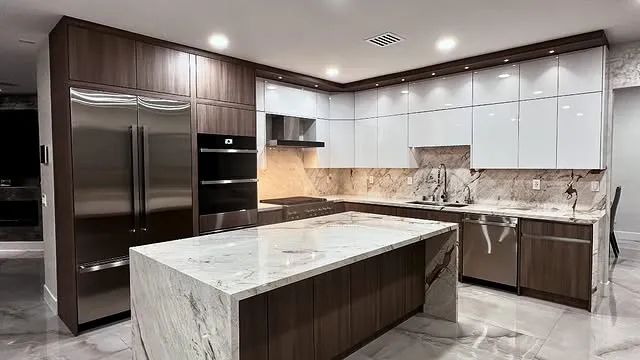
Dekton vs. Quartz vs. Granite: Choosing for Your Las Vegas Kitchen
Choosing the right countertop material for your Las Vegas kitchen means understanding three leading options: Dekton, quartz, and granite. Each material offers distinct advantages in durability, appearance, and maintenance requirements that impact both your daily use and long-term satisfaction. Dekton is an ultra-compact surface made from a blend of raw materials found in glass, porcelain, and natural stone, engineered through extreme heat and pressure to create a material that resists scratches, stains, heat, and UV damage better than most traditional countertop options.
Las Vegas kitchens face unique challenges with intense sunlight, temperature fluctuations, and demanding lifestyles that require surfaces capable of withstanding daily use. Granite brings natural beauty and proven durability, while quartz offers engineered consistency and low maintenance. Dekton combines benefits from both worlds while addressing specific weaknesses found in traditional materials.
This comparison examines how these three materials perform across durability, design flexibility, installation requirements, cost considerations, and long-term value. You’ll discover which surface best matches your kitchen needs, budget, and aesthetic preferences for your Las Vegas home.
Dekton vs. Quartz vs. Granite: Core Comparisons
Each material takes a different path to your countertop—Dekton undergoes extreme heat and pressure as an ultra-compact surface, quartz combines natural minerals with engineered precision, and granite arrives as pure natural stone. Understanding these fundamental differences helps you match material properties to your Las Vegas kitchen needs.
Dekton: What It Is and How It’s Made
Dekton is an ultra-compact surface created through particle sintering technology. The manufacturing process subjects raw materials to extreme heat (up to 2,192°F) and pressure of 25,000 tons, mimicking the natural geological processes that form stone over thousands of years but compressed into hours.
The material combines more than 20 raw materials, including porcelain, glass, and quartz particles. These components fuse together without any resin binders or petroleum-based products. The result is a fully sintered stone with zero porosity.
This production method gives Dekton its extreme density and uniform composition throughout the entire slab. The absence of resins means it can withstand direct heat without damage or discoloration. You get a surface that maintains consistent color and pattern from edge to edge, with no variation between slabs of the same design.
Quartz: Engineered Versatility
Quartz countertops are engineered stone surfaces composed of approximately 90-94% ground natural quartz crystals combined with 6-10% polymer resin binders and pigments. This manufactured composition allows for precise control over appearance and performance characteristics.
The resin binders create a non-porous surface that resists staining without requiring sealing. You can choose from virtually unlimited colors, patterns, and finishes—including designs that mimic marble, concrete, or solid colors not found in nature. The engineering process ensures consistency across slabs.
The resin content makes quartz heat-sensitive compared to natural stone. Placing hot pots directly on the surface can cause discoloration or damage to the binding agents. You’ll need trivets or hot pads for cookware above 300°F, which matters in active Las Vegas kitchens where high-heat cooking is common.
Granite: Natural Stone Beauty
Granite forms deep within the Earth’s crust through the slow crystallization of magma. Each slab is natural stone with unique patterns, color variations, and mineral compositions that developed over millions of years. No two granite slabs are identical.
This natural stone offers exceptional hardness and heat resistance up to 1,200°F. You can place hot pans directly from your oven onto granite without concern. The material contains quartz, feldspar, and mica crystals visible within its surface, creating depth and visual interest.
Granite’s natural porosity requires periodic sealing—typically every 1-2 years depending on the specific variety and usage. Las Vegas’s dry climate can actually help extend sealing intervals. The veining and color variations mean you need to select and approve your specific slabs before fabrication.
Ultra-Compact versus Engineered and Natural Stone
Ultra-compact surfaces like Dekton differ structurally from both engineered stone and natural stone countertops. The sintering process creates a material with zero porosity and complete homogeneity, unlike granite’s natural variations or quartz’s resin-based matrix.
Dekton vs quartz vs granite comes down to composition: Dekton contains no resins, quartz relies on polymer binders for structure, and granite remains entirely natural. This affects performance—Dekton handles UV exposure without fading (important for Las Vegas’s intense sunlight), quartz can yellow outdoors, and granite remains UV-stable but may show existing color variations more prominently in bright light.
Thermal performance separates these materials significantly. Dekton’s complete sintering allows unlimited heat exposure. Granite tolerates high heat naturally. Quartz’s resin content creates vulnerability to thermal shock and sustained temperatures above 300°F.
Maintenance requirements reflect these structural differences. Dekton needs only soap and water with no sealing. Quartz similarly requires no sealing but needs protection from heat. Granite demands periodic sealing to maintain stain resistance but handles heat freely.
Durability and Practical Performance
Dekton, quartz, and granite each deliver different strengths when it comes to withstanding heat, scratches, stains, and daily wear. Understanding how these materials perform in real-world kitchen conditions helps you match the right surface to your cooking habits and maintenance preferences.
Heat Resistance Across All Materials
Dekton offers the highest heat tolerance of the three materials. You can place hot pans directly from the oven or stovetop onto Dekton countertops without risking scorching or discoloration. Granite countertops also handle heat well, allowing you to set down hot cookware without immediate damage, though extreme temperature changes can occasionally cause thermal shock.
Quartz countertops require more caution with heat. The resin binders in engineered quartz can scorch, discolor, or develop permanent marks when exposed to very hot pots and pans. You need to use trivets or hot pads consistently with quartz surfaces to prevent heat damage.
Scratch and Stain Resistance
Dekton provides exceptional scratch resistance due to its ultra-compact manufacturing process, making it highly resistant to knife marks and abrasive cleaning. Quartzite and granite offer good scratch resistance, though hard impacts can still leave marks over time.
Quartz delivers solid scratch resistance for daily use but ranks slightly below Dekton in overall durability. All three materials show strong stain resistance when properly maintained. Dekton and quartz feature non-porous surfaces that naturally resist stains without sealing. Granite can absorb liquids if left unsealed, making it vulnerable to oil, wine, and acidic spills until you apply a protective sealant.
Porosity and Maintenance Factors
Dekton and quartz are non-porous materials that never require sealing. These surfaces resist bacteria growth and prevent liquid absorption, simplifying your daily cleaning routine to just soap and water.
Granite is porous by nature and needs periodic sealing—typically every one to three years depending on the specific stone and usage. Unsealed granite can develop stains from common kitchen substances. The sealing process takes minimal time, but it represents an ongoing maintenance commitment that quartz and Dekton don’t require.
Aesthetic Choices for Kitchen Design
Each countertop material offers distinct visual characteristics that can dramatically transform your kitchen design. From color selection to edge profiles, understanding these aesthetic differences helps you choose a surface that complements your Las Vegas home’s style.
Colors, Patterns, and Finishes
Dekton countertops provide the widest range of design flexibility among these three materials. The manufacturing process allows for consistent patterns and colors, including realistic imitations of marble, concrete, and wood. You can find Dekton in over 40 colors with uniform appearance across slabs, which eliminates the variation concerns present in natural stone.
Granite slabs showcase completely unique patterns since each piece is cut from natural stone formations. No two granite countertops will look identical, with color variations ranging from subtle to dramatic within a single slab. The natural veining and mineral deposits create one-of-a-kind designs, though this unpredictability means you need to select your exact slab before installation.
Quartz surfaces combine the best of both worlds, offering more consistency than granite while maintaining natural-looking patterns. Manufacturers can control the appearance more precisely than natural stone, creating everything from solid colors to marble-like veining. Quartz countertops typically come in hundreds of colors and patterns, with finishes ranging from polished and glossy to honed and matte.
Seams, Edges, and Thickness
All three countertop materials require seams in larger kitchen layouts, but their visibility varies. Quartz and Dekton allow for better seam matching due to their consistent manufacturing patterns. Granite seams are more noticeable because of natural color variations between slabs.
Standard thickness options:
- Dekton: 0.3″, 0.5″, 0.8″, 1.2″
- Quartz: 1.2″, 2cm, 3cm
- Granite: 2cm, 3cm
Edge profiles significantly impact your kitchen’s visual appeal. You can choose from simple straight edges to ornate ogee and bullnose profiles. Dekton edges resist chipping better than quartz or granite due to its ultra-compact structure. Granite and quartz both support decorative edge treatments, though complex edges increase fabrication costs by $10-$30 per linear foot.
Matching Your Kitchen Design Style
Contemporary and minimalist kitchen designs benefit most from Dekton’s clean lines and consistent appearance. The material’s ability to mimic concrete or solid colors suits modern Las Vegas homes with sleek cabinetry and stainless steel appliances.
Traditional kitchen styles pair naturally with granite countertops. The natural stone’s depth and character complement wood cabinets, ornate hardware, and classic design elements. Granite’s organic patterns add warmth that synthetic materials cannot replicate.
Quartz countertops work across multiple design styles, making them the most versatile choice. Transitional kitchens particularly benefit from quartz’s balance between natural appearance and contemporary consistency. You can select marble-look quartz for elegance or solid colors for a modern aesthetic without committing to one specific style direction.
Installation and Maintenance Considerations
All three materials require professional installation, but each presents different challenges and long-term care requirements. Understanding these practical factors helps you budget accurately and plan for the lifetime costs of your countertops.
Professional Installation Needs
Dekton, quartz, and granite all require experienced fabricators, but installation complexity varies significantly between materials. Granite is the heaviest option and often needs additional cabinet reinforcement, particularly for islands or overhangs. Your installer must carefully seal granite immediately after installation and periodically thereafter.
Quartz sits in the middle for weight and typically installs on standard cabinetry without modifications. The material cuts cleanly but requires careful handling during transport since extreme impacts can chip edges.
Dekton demands specialized cutting tools due to its extreme hardness, which increases fabrication costs by 15-30% compared to quartz. However, its strength means you can achieve longer overhangs without support brackets. The material doesn’t need sealing, which reduces installation time. Most Las Vegas fabricators now have the diamond-tipped tools required for Dekton, though you should verify this before purchasing.
Daily Care and Longevity
Your daily cleaning routine differs substantially based on which material you choose. Dekton requires only soap and water for routine cleaning, and you can use acidic cleaners like vinegar without damaging the surface. The material resists staining from wine, coffee, and oil without any protective treatments.
Quartz also needs minimal maintenance with soap and water, but you must avoid abrasive cleaners and acidic substances that can dull the resin binder over time. Hot pans above 300°F can scorch or discolor quartz, requiring trivets for cookware.
Granite demands the most attention. You need to reseal the surface every 1-3 years depending on the specific stone variety and usage patterns. Acidic foods can etch polished granite, and oil-based stains penetrate unsealed areas. Despite this maintenance, properly cared for granite can last 100+ years.
Repair and Replacement Factors
Dekton chips are difficult to repair invisibly due to the material’s through-body composition, though chips occur less frequently than with other materials. Replacement sections require precise color matching since patterns vary between production runs.
Quartz repairs blend more easily since most damage affects only the surface resin layer. Professional repair kits can fix minor chips and scratches, though severe heat damage requires section replacement.
Granite offers the best repair outcomes for chips and cracks since professionals can fill damaged areas with color-matched epoxy that becomes nearly invisible. You can also refresh worn granite by repolishing the surface, something impossible with Dekton or quartz.
Cost, Value, and Longevity in Las Vegas
Material pricing varies significantly between these three countertop materials, with granite typically offering the most budget-friendly entry point and Dekton commanding premium prices. Las Vegas homeowners should weigh installation expenses against long-term performance in the desert climate.
Material and Installation Costs
Granite countertops present the most accessible price range at $40-100 per square foot installed. Mid-grade granite options typically fall between $50-70 per square foot, making them attractive for budget-conscious renovations.
Quartz countertops cost $50-70 per square foot for standard designs. Premium quartz selections can reach $100-150 per square foot. Total installation for an average kitchen runs $2,000-3,900.
Dekton countertops represent the highest investment at $55-115 per square foot installed. The premium pricing reflects the advanced sintering technology and superior performance characteristics. Your total project cost will depend on kitchen size, edge profiles, and color selection.
Installation complexity affects final pricing for all three materials:
- Professional installation is required for dekton countertops and quartz
- Granite offers more DIY potential but still benefits from professional templating
- Dekton requires specialized fabricators, which may be limited in Las Vegas
- Quartz installers are widely available throughout the valley
Long-Term Value and Resale Impact
Granite maintains strong resale appeal due to its natural stone status and widespread buyer familiarity. Most homebuyers recognize granite as a quality upgrade.
Quartz countertops deliver excellent value retention through consistent appearance and low maintenance requirements. The engineered surface appeals to buyers seeking modern, worry-free kitchens.
Dekton offers superior durability that translates to lifecycle value despite higher upfront costs. The 25-year warranty provides tangible assurance to future buyers. Your investment protects against replacement costs that other materials may incur from heat damage or UV exposure.
Kitchen countertops significantly influence home values in Las Vegas markets. All three materials add value, but Dekton’s emerging premium status may differentiate your property in competitive listings.
Suitability for Las Vegas Homes
Las Vegas’s intense UV exposure and extreme heat make countertop material selection critical. Dekton provides complete UV resistance, preventing the discoloration that affects quartz near windows and outdoor kitchen areas.
Quartz countertops perform well in climate-controlled interiors but struggle in outdoor applications. Direct sunlight through large windows can cause yellowing over time. You’ll need window treatments or UV film for west-facing installations.
Granite offers moderate heat tolerance and natural UV stability. Sealed granite withstands Las Vegas conditions when properly maintained, though periodic resealing adds maintenance requirements in the dry climate.
Desert climate considerations:
- Dekton excels in outdoor kitchens and pool areas
- Granite requires more frequent sealing due to low humidity
- Quartz works best in shaded, interior locations
- All three materials handle temperature fluctuations in air-conditioned homes
Sustainability and Brand Considerations
Material sourcing and manufacturing processes impact environmental footprint, while brand reputation affects product quality and warranty support for your Las Vegas kitchen investment.
Eco-Friendly Attributes of Each Material
Granite requires quarrying natural stone, which involves mining operations that disturb landscapes and consume diesel fuel for extraction and transportation. The material itself is natural and requires no chemical processing, but the environmental cost comes primarily from extraction and long-distance shipping.
Quartz countertops contain 90-95% ground natural quartz mixed with 5-10% polymer resins and pigments. Manufacturing requires significant energy for mixing and curing processes. Some brands incorporate recycled glass or mirror fragments to reduce waste, though the resin content means quartz is not fully recyclable at end-of-life.
Dekton uses a sintered stone manufacturing process called TSP (Technology of Sinterized Particles) that compresses raw materials under extreme pressure and heat. This process mimics geological formation but accelerates it to hours instead of millennia. The production requires substantial energy but generates minimal waste since offcuts can be recycled back into production.
Notable Brands and Collections
Cosentino manufactures Dekton and offers collections like Industrial, Natural, and XGloss series with varying finishes. Their sintered stone comes with a 25-year transferable warranty.
Caesarstone and Cambria dominate the quartz market, offering hundreds of color patterns. Cambria produces exclusively in the United States, which reduces shipping distances for North American installations.
For granite, brand matters less than stone origin and fabricator quality. Zicana Boutique and similar Las Vegas showrooms typically source granite slabs from Brazil, India, and Italy, where you select specific slabs rather than ordering from standardized collections like with engineered materials.
Frequently Asked Questions
Dekton withstands scratches and heat better than quartz but costs more and chips more easily at edges. Quartz requires no sealing and resists stains well, while granite offers natural beauty at lower prices but needs periodic sealing.
How does Dekton compare to quartz and granite for durability and scratch resistance?
Dekton offers superior scratch resistance compared to both quartz and granite. You can cut directly on Dekton without damaging the surface, though this isn’t recommended for knife longevity.
Quartz ranks second in scratch resistance. It handles daily kitchen use well but can show marks from sharp objects over time.
Granite is the most susceptible to scratching among the three materials. You’ll need to use cutting boards consistently to prevent surface damage.
All three materials resist impact well, though Dekton’s ultra-compact structure makes it the hardest surface. You’ll find that Dekton can withstand up to 1,200°F without damage, matching granite’s heat tolerance.
What are the main drawbacks of Dekton countertops that homeowners should consider?
Dekton chips more easily at edges and corners than quartz or granite. You’ll need to be careful around the perimeter of your countertops, especially in high-traffic kitchens.
The material requires specialized cutting tools and experienced fabricators. This limitation means fewer contractors can work with Dekton, potentially extending your installation timeline.
Dekton’s color options, while varied, don’t perfectly replicate natural stone patterns. If you want authentic granite veining, you won’t find it in Dekton’s designs.
The weight of Dekton requires robust cabinet support. Your existing cabinets may need reinforcement before installation, adding to project costs.
How do Dekton, quartz, and granite compare in cost, including installation and fabrication?
Dekton typically costs between $60 and $200 per square foot for materials alone. Installation adds another $30 to $60 per square foot depending on your project’s complexity.
Quartz ranges from $50 to $150 per square foot. Your total investment falls in the middle range among these three options.
Granite offers the most budget-friendly option at $40 to $100 per square foot. Installation costs remain similar across all three materials, though Dekton may require higher fabrication fees due to specialized equipment needs.
Las Vegas contractors familiar with Dekton may charge premium rates. You should get multiple quotes since fewer fabricators work with this material compared to quartz or granite.
Is Dekton a type of quartz, and how is it manufactured compared to engineered stone and natural stone?
Dekton is not a type of quartz. It’s an ultra-compact surface made from a blend of raw materials including glass, porcelain, and quartz particles.
The manufacturing process uses extreme heat and pressure to create a non-porous slab. This differs from engineered quartz, which binds crushed stone with resin.
Quartz countertops contain approximately 90-95% ground natural quartz mixed with polymer resins and pigments. The resin content makes quartz susceptible to heat damage that Dekton avoids.
Granite forms naturally within the earth’s crust over millions of years. You’re getting a mined material with inherent variations and unique patterns that man-made products cannot replicate.
How does Dekton perform with heat, UV exposure, and staining in a sunny desert climate?
Dekton excels in Las Vegas conditions. The material won’t fade under intense UV exposure, making it suitable for outdoor kitchens and spaces with direct sunlight.
You can place hot pots directly on Dekton without damage or discoloration. This heat resistance reaches up to 1,200°F, ideal for desert cooking environments.
Quartz suffers in high UV conditions. Your quartz countertops will yellow or fade if installed near south-facing windows or in outdoor applications.
Granite handles heat and UV well but requires sealing every one to two years to prevent staining. In Las Vegas’s dry climate, you may need more frequent sealing to maintain stain resistance.
Dekton’s non-porous surface resists all stains without sealing. You won’t need to worry about acidic foods, oils, or wine damaging your countertops.
What should you know about edge profiles, seams, and chipping risk when choosing Dekton versus quartz or granite?
Dekton’s brittleness makes it prone to edge chipping. You should choose beveled or rounded edge profiles instead of sharp 90-degree edges to minimize this risk.
Seams in Dekton remain visible but tight when properly installed. The material’s consistency means seams don’t disappear as well as they might in granite’s varied patterns.
Quartz offers the most flexibility with edge profiles. You can select intricate designs without significant chipping concerns, and seams blend well in solid colors.
Granite hides seams best due to natural veining patterns. Your fabricator can book-match slabs to create visually appealing transitions at seam locations.
All three materials require professional fabrication. Dekton demands the highest skill level, so you should verify your contractor’s specific experience with this product before proceeding.