
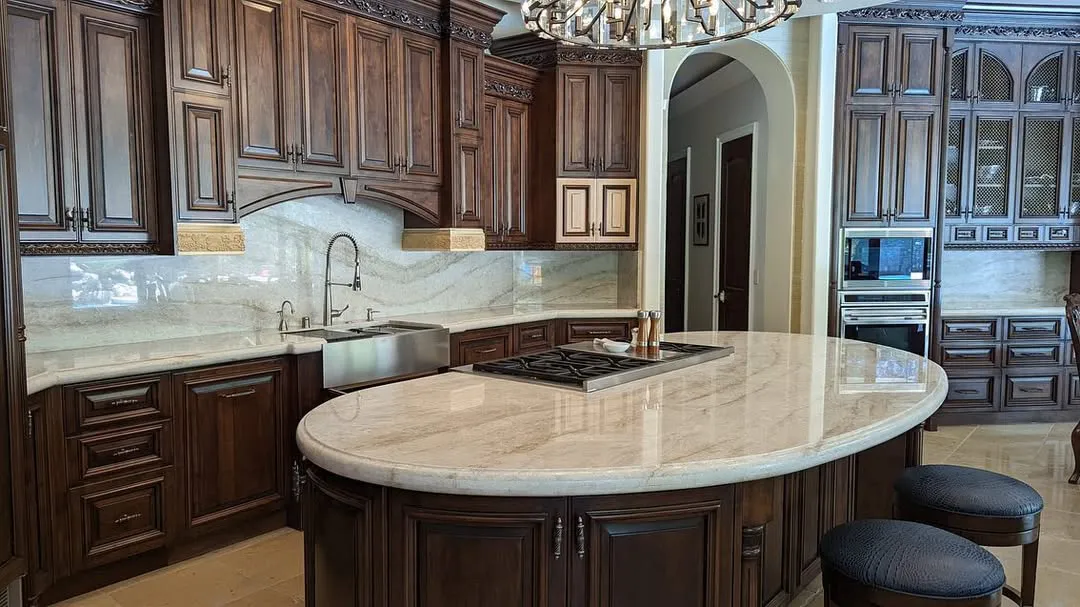
Quartzite Stone Countertops vs. Quartz: What’s the Difference?
Quartzite and quartz countertops sound nearly identical, but they’re fundamentally different materials. One is a natural stone formed deep within the earth through heat and pressure, while the other is an engineered surface created by combining crushed quartz crystals with resins and pigments. The main difference is that quartzite is a natural metamorphic rock with unique veining and exceptional hardness, while quartz is a manufactured product offering uniform appearance and lower maintenance.
Understanding which material fits your lifestyle requires looking beyond the similar names. Quartzite demands periodic sealing and careful maintenance but rewards you with unmatched natural beauty and superior hardness. Quartz countertops resist stains without sealing and deliver consistent patterns, making them practical for busy households.
Your decision depends on whether you prioritize the distinctive character of natural stone or the predictable performance of engineered surfaces. This guide walks you through how each material performs with scratches, stains, heat, and daily wear, what you’ll pay for installation, and which option aligns with your design goals and maintenance preferences.

Free Estimate
Get a free estimate for quartz countertops, granite and marble countertops, slab shower walls, and custom stone fabrication in Las Vegas. Our team will review your project, answer your questions, and recommend the best options for your space, style, and budget.
Key Differences Between Quartzite and Quartz Countertops
Quartzite is a natural stone formed through geological processes, while quartz countertops are engineered surfaces made from crushed quartz crystals and resin. These two materials differ fundamentally in their composition, appearance, maintenance requirements, and performance characteristics.
What Is Quartzite?
Quartzite is a natural stone that forms when sandstone undergoes intense heat and pressure deep within the Earth’s crust. This metamorphic process transforms sand-sized quartz grains into an extremely hard and dense rock.
The stone typically features lighter colors and distinctive veining patterns that resemble marble. Each slab is unique, with natural variations in color and pattern that you won’t find replicated elsewhere.
Quartzite ranks among the hardest natural stones available for countertops, surpassing both granite and marble in durability. The stone often displays a slightly glassy appearance due to the resins applied during processing to seal its porous surface. You’ll find quartzite primarily sourced from Brazil and other specific regions around the world, which contributes to its higher cost compared to some alternatives.
What Is Quartz?
Quartz countertops are engineered surfaces manufactured by combining approximately 90% crushed natural quartz crystals with 10% resins, polymers, and pigments. This manufacturing process allows for precise control over the final appearance and performance characteristics.
The engineered nature of quartz means you can choose from virtually unlimited colors, patterns, and designs. Manufacturers can create surfaces that mimic marble, granite, or other natural stones with remarkable accuracy.
Unlike natural stone options, quartz is non-porous due to its resin content. This makes it resistant to staining without requiring any sealant application. The manufacturing process also ensures consistency across slabs, so you can expect uniform coloring and patterns throughout your installation. Modern fabrication techniques allow edges to be finished similarly to natural stone, making installed quartz countertops nearly indistinguishable from the materials they emulate.
Natural vs. Engineered Stone
Natural stone like quartzite comes directly from the earth with minimal processing beyond cutting and polishing. Engineered stone like quartz is manufactured in controlled factory conditions using natural materials combined with synthetic components.
| Aspect | Quartzite (Natural) | Quartz (Engineered) |
|---|---|---|
| Origin | Formed naturally over millions of years | Manufactured in factories |
| Composition | 100% natural metamorphic rock | ~90% crushed quartz, ~10% resins and additives |
| Appearance | Unique, one-of-a-kind patterns | Consistent, customizable designs |
| Porosity | Porous, requires sealing | Non-porous, no sealing needed |
The natural formation process gives quartzite its hardness and heat resistance, while the engineering process gives quartz its stain resistance and design flexibility. Your choice between natural stone and engineered stone depends on whether you prioritize authentic geological characteristics or manufactured consistency and convenience.
Understanding Quartz vs Quartzite Countertops
The difference between quartz and quartzite countertops extends beyond their formation to practical performance factors. Quartzite countertops can withstand higher temperatures than quartz countertops because they formed under extreme heat conditions naturally. However, quartz is more flexible and less prone to chipping.
Both materials resist scratches well, though quartzite technically ranks harder on the mineral hardness scale. Quartzite requires resealing every one to three years to maintain its stain resistance, while quartz needs no ongoing treatment.
Maintenance requirements:
- Quartzite: Requires periodic sealing, avoid acidic cleaners like vinegar
- Quartz: No sealing needed, simple soap and water cleaning
Price ranges overlap significantly, with quartzite typically costing $80-$220 per square foot and quartz ranging from $50-$200 per square foot. Quartzite generally lacks budget-friendly entry-level options, while quartz offers selections at various price points. Both materials last for decades when properly maintained, though quartzite may outlast quartz slightly due to its natural composition and resistance to discoloration.
Appearance and Design Options
Quartzite and quartz offer distinctly different aesthetics, with quartzite showcasing natural beauty and quartz providing design flexibility. Your choice between these countertop materials will largely depend on whether you prioritize organic character or controlled consistency.
Unique Characteristics of Quartzite
Quartzite countertops deliver a natural stone appearance that cannot be replicated. Each quartzite slab forms through geological processes that create distinctive patterns, making every piece unique. The natural veining flows across the surface in ways that vary from subtle to dramatic, with colors influenced by mineral deposits present during formation.
Common quartzite colors include whites, grays, and beiges, though you can find slabs with pink, gold, or blue tones. Popular options like Taj Mahal feature soft gray and gold veining, while Calacatta Montreal displays bold white backgrounds with striking gray veins. The stone’s crystalline structure often creates a slight sparkle or shimmer under light, adding depth to your space.
Because quartzite is a natural material, you cannot predict exactly what each slab will look like. This unpredictability appeals to homeowners who want a one-of-a-kind focal point in their kitchen.
Variety of Quartz Colors and Patterns
Quartz countertops offer extensive design possibilities through their engineered composition. Manufacturers blend ground quartz with resins and pigments to create virtually any color or pattern you desire. You can select from pure whites, deep blacks, vibrant colors, or earth tones that complement your design scheme.
The manufacturing process allows for consistent patterns across multiple slabs. If you want a marble look without the maintenance, many quartz options mimic Carrara or Calacatta marble with realistic veining. Some designs feature speckled patterns, while others offer solid colors for a modern, minimalist aesthetic.
Quartz slabs provide more predictability than quartzite. You can view samples that accurately represent how your finished countertops will look, making design planning straightforward.
Natural Veining vs. Uniformity
The veining difference between these materials significantly impacts your kitchen’s final appearance. Quartzite displays organic veining patterns that flow naturally through the stone, with no two sections looking identical. These variations create visual interest but require careful planning during installation to achieve the desired look.
Quartz countertops feature controlled veining that remains consistent across the surface. If your quartz slab has veining, it will follow predictable patterns engineered into the material. This uniformity works well in contemporary spaces where you want a clean, cohesive appearance without natural stone’s unpredictability.
Your preference for natural character versus designed consistency should guide your choice. Quartzite suits those who embrace organic imperfections, while quartz appeals to those who prefer controlled aesthetics.
Matching Slabs and Seams
Achieving continuity across your countertops requires different approaches for each material. With quartzite slabs, matching adjacent pieces can be challenging due to natural variation. Your fabricator must carefully select and orient slabs to create visual flow, though perfect matches are rarely possible. Seams may be more noticeable where different quartzite sections meet.
Quartz slabs offer easier matching since patterns are manufactured to be consistent. Multiple slabs from the same production run will look nearly identical, allowing seams to blend more seamlessly. This consistency simplifies installation for larger countertop areas or L-shaped configurations.
Book-matching or quarter-matching techniques can enhance both materials. These methods align slabs to create mirrored or sequential patterns, though they work more predictably with quartz than with quartzite’s natural variations.
Durability and Performance in Daily Use
Both materials rank among the most durable countertop options available, but they handle everyday wear differently. Quartzite excels in heat tolerance and raw hardness, while engineered quartz offers superior stain resistance and uniform strength throughout the slab.
Scratch and Chip Resistance
Quartzite rates between 7 and 8 on the Mohs hardness scale, making it one of the hardest natural stone countertops you can install. You can cut directly on the surface without leaving marks, though this will dull your knives. The stone’s rigidity means edges can chip if struck with heavy force, but the dense crystalline structure resists everyday scratching exceptionally well.
Engineered quartz typically rates around 7 on the Mohs scale. The resin binders give the material slight flexibility, which helps prevent edge chips during normal use. Your kitchen countertops will resist scratching from daily meal prep, but extremely hard impacts can still cause damage. The uniform composition means any scratches that do occur will be consistent throughout the slab rather than hitting weak points in the stone.
Heat and UV Tolerance
Quartzite formed under extreme heat and pressure deep in the earth, so it handles high temperatures without damage. You can place hot pans directly from the oven or stovetop onto the surface without scorching or discoloration. The stone also resists UV exposure, making it suitable for outdoor kitchens or areas with direct sunlight.
Quartz contains polymer resins that can scorch or discolor when exposed to temperatures above 300°F. Always use trivets or hot pads under hot cookware. Extended UV exposure can cause yellowing in some engineered quartz products, particularly lighter colors. If your countertops receive direct sunlight, check with your fabricator about UV-stable options.
Long-Term Resilience
Quartzite maintains its appearance for decades when properly sealed. The stone won’t fade, and surface wear typically enhances its natural character. You’ll need to reseal it periodically based on porosity, but the stone itself remains structurally sound indefinitely.
Quartz maintains consistent performance without sealing requirements. The non-porous surface resists bacteria growth and won’t develop the patina that natural stone acquires over time. Some lower-grade products may yellow near windows or show wear patterns in high-traffic areas, but premium brands maintain their appearance with minimal maintenance.
Maintenance and Stain Resistance
Quartzite and quartz countertops require vastly different maintenance approaches due to their distinct compositions. Quartzite needs regular sealing to protect its porous surface, while quartz requires minimal upkeep thanks to the resins in quartz that create a non-porous barrier.
Sealant and Porosity Considerations
Your quartzite countertop requires annual sealing to maintain stain resistance. This natural stone is inherently porous, meaning liquids can penetrate the surface and cause permanent discoloration without proper protection. You should apply a high-quality penetrating sealer once per year, though high-traffic areas may need resealing every six months.
Quartz countertops eliminate this maintenance step entirely. The resins in quartz create a non-porous surface that doesn’t absorb liquids. You won’t need to purchase sealers or schedule yearly maintenance appointments.
Test your quartzite’s seal by placing a few drops of water on the surface. If the water beads up, your seal is intact. If it darkens the stone within a few minutes, you need to reseal.
Care and Cleaning Differences
Quartz countertops need only mild dish soap and water for daily cleaning. You can use most household cleaners without worry, though you should avoid harsh chemicals like bleach or oven cleaners that might damage the surface over time.
Quartzite requires pH-neutral cleaners specifically designed for natural stone. Acidic substances like vinegar or lemon juice can etch the surface even when sealed. You must clean spills immediately on quartzite to prevent staining, especially from wine, coffee, or oils.
Both surfaces should be cleaned with a soft cloth rather than abrasive scrubbers that could dull the finish.
Stain Prevention Tips
Place coasters under all glasses and bottles on your quartzite countertop to prevent rings. Use cutting boards for food preparation rather than cutting directly on either surface. Wipe up spills within minutes on quartzite, particularly acidic liquids like tomato sauce or citrus juice.
Your quartz countertop offers better inherent stain resistance but isn’t completely immune. Highly pigmented substances left for extended periods can still cause discoloration. Avoid exposing quartz to strong dyes from markers or hair products.
Keep hot pans off both surfaces using trivets, though quartzite tolerates heat better than quartz.
Cost Comparison and Value Considerations
Quartzite typically costs $65 to $150 per square foot installed, while quartz ranges from $50 to $200 per square foot installed. Both materials fall within similar price ranges, though specific costs depend on factors like slab quality, brand, thickness, and edge treatments.
Quartzite Countertops Cost
Quartzite countertops cost $65 to $150 per square foot installed. For a standard kitchen with 30 to 40 square feet of counter space, you’ll pay between $2,000 and $6,000 total.
The natural stone’s price varies based on rarity and appearance. Standard white, gray, and beige quartzite sits at the lower end of the price range. Vivid colors like blue, orange, green, yellow, pink, and red command premium prices because they’re harder to source. Dramatic veining patterns that mimic high-end marble also increase costs.
Thicker slabs cost more than standard 2-cm options. The 3-cm and 4-cm slabs provide added durability and a more substantial appearance but add to the material and installation expenses.
Quartz Countertops Cost
Quartz countertops cost $50 to $200 per square foot installed. A typical 30- to 40-square-foot kitchen installation runs between $1,500 and $8,000.
The engineered stone’s wide price range reflects the variety of available options. Basic quartz with simple patterns or solid colors starts at the lower end. Mid-range options include more detailed patterns and designs that mimic natural stone. Premium quartz features exotic looks, designer brands like Cambria or Caesarstone, and special finishes.
Edge treatments, backsplashes, and cutouts for sinks and cooktops add to the base material cost. Custom colors and patterns increase prices compared to standard selections.
Quartz vs Quartzite Cost Factors
Several factors influence the final price difference between quartz and quartzite beyond the base material cost.
Labor and installation costs vary by material. Quartzite requires experienced fabricators familiar with working natural stone. The material’s hardness makes cutting and shaping more challenging, potentially increasing labor charges.
Maintenance expenses differ significantly. Quartz needs only soap and water cleaning with no sealing required. Quartzite requires regular sealing every 1 to 2 years and pH-balanced cleansers for daily cleaning. These ongoing costs add to quartzite’s lifetime ownership expense.
Resale value considerations matter if you plan to sell your home. Quartz typically delivers higher resale value than natural stone options. However, high-quality quartzite in desirable colors can also boost home value depending on your market.
Brand selection impacts pricing for both materials. Premium brands charge more but often include better warranties and quality control. Lesser-known brands may offer savings but with potentially inconsistent quality.
Choosing the Right Countertop for Your Needs
Your decision between quartzite and quartz depends on how you use your kitchen, which brands offer the features you need, and practical factors like environmental impact and installation requirements.
Lifestyle and Usage Requirements
Your cooking habits should guide your material choice. If you frequently work with hot pots and pans, quartzite handles heat without damage, while quartz requires trivets or hot pads to prevent scorching above 300 degrees Fahrenheit. Quartzite resists scratches and acid better, making it suitable for households that do heavy food prep directly on countertops.
Maintenance tolerance matters significantly. Quartz needs only water and mild cleaner for routine care, with no sealing required. Quartzite demands annual sealing to prevent stains and bacteria growth, adding recurring maintenance to your schedule.
For busy households, quartz offers practical advantages:
- No sealing needed
- Non-porous surface resists stains immediately
- Consistent patterns hide minor wear
For cooking enthusiasts, quartzite provides:
- Direct heat resistance for hot cookware
- Superior scratch resistance for knife work
- Natural stone durability
Popular Brands and Options
Cambria produces quartz countertops exclusively in the United States, offering extensive color selections and patterns. Their engineered slabs provide consistent quality with standard sizing that simplifies installation planning.
Silestone incorporates antimicrobial protection into their quartz surfaces, adding an extra hygiene layer for kitchen environments. Their color range includes bold options not available in natural quartzite.
Caesarstone focuses on engineered quartz with precise manufacturing standards. Their products offer reliable performance at competitive price points, typically $60 to $150 per square foot installed.
Quartzite comes from various quarries rather than specific brands. You’ll select based on the individual slab’s appearance, since natural variation means no two pieces match exactly. This uniqueness appeals to homeowners wanting one-of-a-kind surfaces but complicates matching if you need multiple slabs.
Environmental and Installation Considerations
Quartzite qualifies as fully natural stone, containing 90 to 99 percent quartz bound by natural silica. This appeals to environmentally conscious buyers avoiding synthetic materials. Quartz countertops contain 6 to 10 percent polymer resins and pigments, making them engineered rather than natural.
Both materials require professional installation due to their weight. Quartzite weighs approximately 20 pounds per square foot, while quartz ranges from 20 to 25 pounds per square foot. Neither suits DIY projects.
Installation complexity affects your timeline and budget. Quartz slabs come in standard 120 by 55 inch sizes with uniform thickness, streamlining the installation process. Quartzite slabs vary in dimensions because they’re cut from natural stone blocks, requiring more precise measurement and custom cutting with diamond blades. This variability contributes to quartzite’s higher cost of $70 to $200 per square foot installed compared to quartz’s $60 to $150 range.
Local availability influences your options. Quartz from Cambria, Silestone, or Caesarstone ships readily through established distribution networks. Quartzite availability depends on current inventory from stone suppliers, and specific colors or patterns may have limited stock.
Frequently Asked Questions
Quartzite is natural stone quarried from the earth, while quartz is an engineered product made from ground quartz mixed with resins. Understanding these distinctions helps you navigate pricing, maintenance schedules, and performance expectations for your kitchen investment.
What are the key differences between quartzite and quartz in terms of material composition and how they are made?
Quartzite is a natural metamorphic stone that forms when sandstone undergoes intense heat and pressure deep underground over thousands of years. It’s quarried in large slabs, then cut and polished to size for countertops.
Quartz countertops are engineered surfaces made from approximately 90% ground quartz crystals combined with 10% synthetic resins and pigments. The manufacturing process allows for consistent patterns and controlled coloring that natural stone cannot replicate.
This fundamental difference in origin affects everything from appearance to performance characteristics.
How do quartzite and quartz compare on durability, scratch resistance, and heat resistance for kitchen use?
Quartzite ranks slightly harder than quartz on the Mohs scale, making it more resistant to scratches from knives and kitchen tools. Its formation under extreme underground heat also gives it superior heat resistance, allowing you to place hot pots directly on the surface without damage.
Quartz offers excellent scratch resistance for daily use but can be damaged by excessive heat. The resin binders can discolor or crack when exposed to temperatures above 300 degrees Fahrenheit.
Both materials resist chipping and cracking well under normal kitchen conditions. Quartzite’s natural hardness gives it a slight edge in long-term durability, though both can last decades with proper care.
How do the maintenance requirements differ between quartzite and quartz, including sealing and stain prevention?
Quartzite requires annual sealing because it’s a porous natural stone that can absorb liquids and stain if left unprotected. You’ll need to apply a quality stone sealer and test water absorption regularly to maintain stain resistance.
Quartz is non-porous and never needs sealing. You can simply wipe it down with mild soap and water or a standard household cleaner after use.
For daily cleaning, both surfaces handle regular kitchen messes well. The key difference is that quartzite demands preventive maintenance while quartz remains maintenance-free beyond basic cleaning.
What is the typical price difference between quartzite and quartz countertops, including installation costs?
Quartzite costs between $70 and $220 per square foot installed, with rare colors and dramatic veining patterns commanding premium prices. The quarrying, transportation, and fabrication of natural stone contribute to higher costs.
Quartz ranges from $60 to $150 per square foot installed. The engineered manufacturing process allows for more predictable pricing across different colors and patterns.
Your total project cost depends on square footage, edge treatments, and cutouts for sinks and cooktops. Quartzite typically adds 15-30% to your countertop budget compared to quartz.
Which countertop option tends to perform better in busy kitchens with heavy daily use: quartzite or quartz?
Quartz excels in high-traffic kitchens with young children or frequent cooking because its non-porous surface resists stains without any sealing requirements. Spilled wine, tomato sauce, and oil wipe away easily without leaving marks.
Quartzite performs well in busy kitchens if properly sealed and maintained. Its superior scratch and heat resistance make it ideal near stovetops and prep areas where hot pans and sharp knives are common.
Your choice depends on whether you prioritize convenience or durability. Quartz wins for low-maintenance performance, while quartzite offers better physical durability if you commit to annual sealing.
How do quartzite, quartz, and granite compare in cost and performance for countertops?
Granite typically costs $40 to $100 per square foot, making it the most budget-friendly option of the three. Like quartzite, it requires annual sealing but offers moderate heat and scratch resistance.
Quartzite is the most expensive and hardest material, with superior heat resistance compared to both granite and quartz. Its unique veining patterns tend to be more dramatic than granite’s speckled appearance.
Quartz sits in the middle price range and requires the least maintenance since it never needs sealing. It offers better stain resistance than granite but lower heat tolerance than both natural stones. All three materials provide long-lasting performance when properly cared for, with your choice depending on budget, aesthetic preferences, and maintenance willingness.
0 comments