
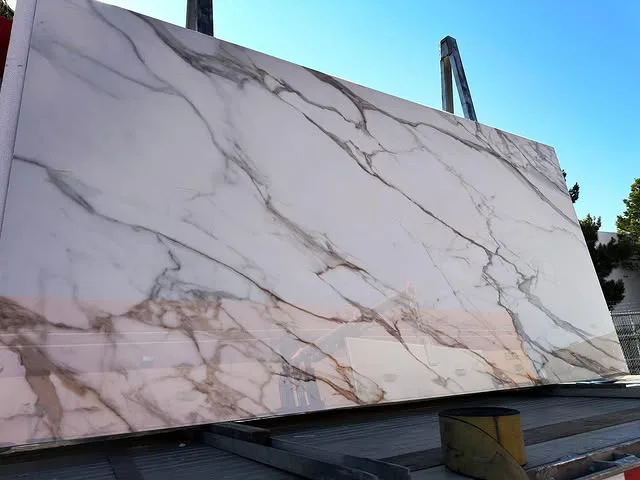
Marble Kitchen Countertops with Waterfall Edge: Inspiring Las Vegas Designs
Las Vegas kitchens are embracing a design element that transforms ordinary countertops into architectural statements. The waterfall edge extends marble from the countertop surface down to the floor, creating a continuous flow of natural stone that brings immediate luxury to any kitchen space. This design choice has become particularly popular across Summerlin, Henderson, and throughout the valley as homeowners seek modern upgrades that blend function with visual impact.
A marble waterfall countertop creates a sleek, sculptural focal point in your kitchen while protecting cabinet edges from daily wear and concealing appliances for a cleaner look. The continuous stone cascading down the sides of your island or peninsula adds dimension and sophistication that works especially well in open-concept layouts common in Las Vegas homes.
Choosing marble for your waterfall edge offers distinct advantages, from timeless veining patterns to cool surfaces ideal for our desert climate. You’ll discover how different marble varieties compare to other materials, what the installation process involves, and how to maintain your investment for years to come.
What Is a Waterfall Edge Countertop?
A waterfall edge countertop extends the countertop material vertically down the side of a cabinet or island to the floor, creating a continuous flow of stone. This design transforms standard horizontal surfaces into architectural features that serve as focal points in contemporary kitchens.
Defining the Waterfall Edge
The waterfall edge describes a countertop installation where the surface material cascades down one or both sides of an island or cabinet at a 90-degree angle. The stone, marble, or engineered surface runs from the horizontal top surface down to the floor in an unbroken sheet.
This design creates the appearance of a single, monolithic block rather than separate pieces joined together. Fabricators achieve this seamless look by cutting the material at precise 45-degree mitered angles where the horizontal and vertical surfaces meet. The mitered joints allow the stone’s veining or pattern to align perfectly, creating visual continuity.
Most waterfall countertops appear on kitchen islands where both sides remain visible. You can also install them on peninsulas or at the end of cabinet runs where the countertop terminates in open space rather than against a wall.
Differences from Traditional Countertops
Traditional countertops stop at the cabinet edge, leaving the cabinet base exposed beneath the overhanging surface. The countertop typically extends 1-2 inches beyond the cabinet for a standard overhang.
Waterfall edge countertops eliminate this exposed cabinetry by covering the vertical sides completely. This requires significantly more material since you’re adding the cabinet depth multiplied by the height to the floor for each waterfall side. A standard island with two waterfall edges can require 20-30 additional square feet of material compared to a traditional installation.
The installation process differs substantially as well. Traditional countertops rest on top of cabinets with minimal fabrication complexity. Waterfall installations demand CNC laser cutting to create the mitered edges and precise measurements to ensure the pattern flows correctly from horizontal to vertical surfaces.
Aesthetic and Functional Benefits
Waterfall edge countertops create a striking visual statement in contemporary kitchens by turning functional surfaces into sculptural design elements. The continuous flow of marble or stone draws the eye and establishes the island as the room’s centerpiece, particularly effective in open-concept layouts.
The vertical panels provide practical protection for cabinet sides against scratches, dents, and wear from foot traffic or chairs. This durability extends the life of your cabinetry while maintaining a polished appearance.
Key functional advantages include:
- Enhanced durability through protected cabinet sides
- Easy maintenance with no seams or joints where the vertical surface meets the floor
- Cohesive appearance that unifies the countertop into a single design element
- Increased value through high-end architectural detailing
The waterfall design works particularly well with marble because the stone’s natural veining creates dramatic visual interest as it flows from the horizontal surface down the sides. When properly book-matched, the veining patterns mirror each other at the mitered edge, amplifying the luxurious appearance that defines contemporary kitchen aesthetics.
Why Choose Marble Waterfall Countertops for Las Vegas Homes?
Marble waterfall countertops bring together luxury materials and bold design to create kitchen focal points that stand out in the competitive Las Vegas housing market. These installations offer distinct advantages for homeowners who value aesthetics, investment potential, and modern styling.
Distinctive Visual Appeal
A marble waterfall countertop creates immediate visual impact through its continuous stone flow from horizontal surface to floor. The veining patterns in marble align vertically along the waterfall edge, drawing the eye downward and adding architectural dimension to your kitchen space.
White marble waterfall installations reflect natural and artificial light throughout the room, which benefits Las Vegas homes where bright, open spaces are desirable. The stone’s natural variations ensure no two waterfall kitchen islands look identical. Calacatta and Carrara marble varieties provide dramatic veining that becomes more prominent when displayed vertically on the waterfall edge.
The seamless appearance of marble waterfall edges eliminates visual breaks between countertop and cabinetry. This creates a cohesive, high-end look that elevates the entire kitchen design. The thickness of the marble slab becomes a design feature itself, showcasing the quality and substance of the material in ways standard edge profiles cannot achieve.
Enhancing Property Value
Marble kitchen countertops with waterfall edges signal premium finishes to potential buyers in the Las Vegas real estate market. These features are associated with luxury homes and designer renovations, positioning your property in a higher value bracket.
The investment in a marble waterfall installation typically returns well during resale because buyers recognize the material costs and craftsmanship involved. Kitchen upgrades consistently rank among the most valuable home improvements, and statement pieces like waterfall islands create memorable impressions during showings.
Las Vegas homebuyers actively seek move-in-ready properties with modern amenities. A waterfall kitchen island serves as a selling point that differentiates your home from comparable listings in neighborhoods from Summerlin to Henderson.
Suitability for Modern and Contemporary Styles
Contemporary kitchen designs prioritize clean lines, minimal ornamentation, and quality materials—all characteristics that marble waterfall countertops embody. The vertical drop of stone complements flat-panel cabinetry and handleless drawer systems common in modern Las Vegas homes.
Open-concept floor plans benefit from waterfall edges that help define kitchen zones without adding physical barriers. The marble waterfall creates visual separation between cooking and living areas while maintaining sightlines and flow. This design approach works particularly well in condos and homes with combined kitchen-dining-living spaces.
Marble’s natural color palette pairs with popular contemporary finishes including stainless steel appliances, matte black fixtures, and natural wood accents. The stone’s timeless quality prevents the design from appearing dated, even as specific trends shift over time.
Comparing Material Options for Waterfall Countertops
Waterfall countertops work with multiple materials, each offering distinct benefits in durability, maintenance, and aesthetics. Marble and quartz dominate the high-end market, while granite and stainless steel provide alternative approaches for different design goals and budgets.
Marble vs. Quartz Waterfall Countertops
A marble waterfall countertop delivers unmatched natural beauty with unique veining patterns that make each installation one-of-a-kind. The stone’s luxurious appearance creates an elegant focal point, particularly in Las Vegas homes where high-end finishes are prized. However, marble requires regular sealing and careful maintenance to prevent etching from acidic substances and staining from spills.
Quartz waterfall countertops offer a practical alternative with engineered durability and virtually no maintenance requirements. The non-porous surface resists stains and doesn’t need sealing, making it ideal for active kitchens. Quartz countertops come in hundreds of colors and patterns, including convincing marble-look options that replicate natural veining without the upkeep demands.
Cost differences are significant. Quartz installations typically range from $2,000 to $7,000, while marble runs $3,000 to $12,000 depending on slab quality and size. Your choice depends on whether you prioritize natural authenticity and are willing to commit to maintenance, or prefer engineered reliability with consistent performance.
Granite Waterfall Countertops
A granite waterfall countertop combines natural stone character with superior durability compared to marble. Granite resists scratches and heat better than most materials, though it still requires periodic sealing to maintain stain resistance. The material’s naturally occurring patterns create visual depth that works well in both traditional and contemporary Las Vegas kitchens.
Granite waterfall installations showcase the stone’s full thickness and grain pattern from multiple angles, creating a substantial architectural presence. Color options range from subtle neutrals to dramatic blacks and exotic patterns with bold movement. Pricing falls between quartz and marble, generally ranging from $2,500 to $8,000 installed.
The material handles Las Vegas’s climate well and maintains its appearance with moderate care. Granite offers a middle ground for homeowners who want natural stone authenticity without marble’s maintenance intensity.
Stainless Steel and Other Alternatives
Stainless steel waterfall countertops suit modern, industrial, or professional-style kitchens where function takes priority. The material is completely non-porous, heat-resistant, and sanitary, though it shows fingerprints and scratches more readily than stone options. Steel works best as an accent or in specific design contexts rather than as a primary kitchen surface.
Porcelain slabs provide another alternative with thin profiles and large-format options that minimize seams. Solid surface materials like Corian offer seamless fabrication and repairability but lack the prestige of natural stone. These alternatives typically cost less than marble but don’t deliver the same visual impact or property value enhancement that stone waterfall countertops provide in upscale Las Vegas homes.
Design Inspirations and Style Ideas
Waterfall edge countertops work best when paired thoughtfully with surrounding elements. The right combination of cabinetry, backsplash materials, marble patterns, and spatial planning creates a cohesive kitchen that feels intentional rather than assembled.
Pairing with Wood Cabinets
Wood cabinets balance the coolness of marble with organic warmth. Dark walnut or espresso-stained cabinets create high contrast against white or light-veined marble, making your waterfall island the focal point. Lighter woods like oak or maple soften the overall look and work well in contemporary kitchens where you want texture without heavy visual weight.
The key is letting one element lead. If your marble has bold veining, keep cabinet finishes simple with minimal hardware. If you choose a quieter marble like Thassos or Carrara, you can introduce more cabinet detail through grain patterns or wood tone variation.
In Las Vegas homes with open floor plans, wood cabinets help distinguish the kitchen zone while the waterfall edge provides a modern accent. This combination prevents the space from feeling too cold or sterile, which can happen in desert climates where natural materials add needed warmth.
Mixing Stone Backsplashes
A stone backsplash extends your marble’s presence beyond the countertop. You can match the backsplash to your waterfall countertop for a continuous look, or introduce a complementary stone for subtle layering. Full-height backsplashes work especially well behind ranges or sinks, creating a framed zone that anchors cooking or prep areas.
Mixing materials requires attention to scale. If your waterfall island features thick, dramatic slabs, your backsplash should either match that presence or pull back entirely. Textured stone backsplashes add dimension when paired with honed or leathered marble countertops.
For waterfall kitchen islands in open layouts, the backsplash becomes part of the overall composition. A marble backsplash that wraps into your waterfall edge creates visual flow and makes the island feel like an intentional sculptural element rather than a standalone piece.
Choosing Colors and Veining
Marble veining determines how dramatic your waterfall edge appears. Bold veining like Calacatta Gold or Statuario creates immediate impact, with patterns that flow down the waterfall side. Subtle veining in Carrara or White Macaubas offers definition without overwhelming other design elements.
Color choice affects room temperature. Cool whites and grays suit contemporary kitchens with stainless appliances and minimal color palettes. Warmer marbles with beige or gold undertones complement wood-heavy spaces and traditional layouts common in Las Vegas suburban homes.
Veining considerations:
- Book-matched slabs create symmetry across the waterfall edge
- Horizontal veining emphasizes width and makes islands feel grounded
- Vertical veining draws the eye down and highlights the waterfall detail
- Mixed veining works best in larger kitchens where patterns have room to develop
Integrating Waterfall Islands in Open Layouts
Open floor plans require waterfall islands that function as room dividers without blocking sightlines. The vertical edge defines the kitchen boundary while maintaining visual connection to adjacent living spaces. Position your waterfall island so the finished edge faces the main living area, turning it into an architectural feature visible from multiple angles.
Scale matters in open layouts. An undersized waterfall island gets lost in large spaces, while an oversized one can obstruct flow. For typical Las Vegas great rooms, islands between 7-9 feet long with waterfall edges on both ends create balanced presence without dominating the floor plan.
Seating placement affects how your waterfall edge functions. Counter-height seating works on the kitchen side, leaving the waterfall edge clean and uninterrupted on the living room side. This arrangement maintains the sculptural quality while adding practical dining space.
Waterfall Countertop Installation Essentials
Successful waterfall installation for marble countertops requires precision in fabrication, strategic seam placement, and careful planning for how your island will function in daily use. These technical elements determine whether your waterfall edge becomes a lasting focal point or a source of maintenance issues.
Professional Planning and Book-Matching
Marble’s natural veining demands careful slab selection before any cutting begins. Book-matching aligns the patterns where the horizontal top meets the vertical waterfall drop, creating a mirror image that makes the stone appear continuous. Your fabricator should lay out the slabs in your desired configuration before cutting to ensure the veining flows naturally around corners.
Professional installers use CNC machines to achieve the precise angles needed for waterfall countertops. These computer-controlled cuts ensure that mitered joints fit together with minimal gaps. The slab thickness typically ranges from 2 to 3 inches for waterfall edges, though this can vary based on your design preferences and structural needs.
Las Vegas homes with open floor plans benefit particularly from thoughtful pattern placement, as waterfall edges remain visible from multiple angles. Your fabricator should photograph the layout for your approval before proceeding with cuts, allowing you to verify that the veining complements your kitchen renovation goals.
Mitered Edges and Seam Placement
Mitered edges form the critical 45-degree joint where your countertop surface turns downward. This joint must be tight and precisely aligned to maintain the illusion of a single piece of marble flowing from top to floor. Fabricators use color-matched epoxy to bond these seams, creating an almost invisible connection when done correctly.
The placement of these seams affects both aesthetics and structural integrity. Most installers position the miter at the edge where the countertop begins its descent, though some designs incorporate the seam slightly underneath the horizontal surface for a cleaner look. Each seam requires proper curing time—typically 24 hours—before the installation can proceed.
Poor seam execution creates weak points vulnerable to moisture infiltration and stress cracks. Quality fabricators will polish the seam area to match the rest of the marble’s finish, ensuring consistency across the entire waterfall edge.
Considerations for Island Functionality
Your waterfall countertops must accommodate both visual appeal and practical use, especially if the island includes seating. Standard overhang depth for bar seating ranges from 12 to 15 inches, with additional support brackets required beyond 12 inches. Each seated person needs approximately 24 inches of horizontal space for comfortable dining or working.
Waterfall edges that extend to the floor limit legroom unless you plan the drop placement strategically. Some designs incorporate a partial waterfall on one side only, leaving the other side open for stools or chairs. Others use thinner support posts instead of a full slab descent to preserve seating capacity while maintaining the waterfall aesthetic.
Appliance placement requires advance coordination during kitchen renovation planning. Dishwashers, wine coolers, or built-in microwaves near the waterfall edge need adequate clearance for doors and ventilation. Your installer should verify all measurements account for both the marble thickness and any support structures before finalizing the layout.
Maintenance, Durability, and Cost Considerations
Marble waterfall countertops require consistent care to preserve their appearance, particularly in Las Vegas’s hard water conditions. Understanding material costs, installation expenses, and long-term maintenance requirements helps you make an informed decision for your kitchen renovation.
Everyday Care for Marble Waterfall Edges
Marble surfaces need immediate attention when spills occur. Acidic substances like lemon juice, wine, and vinegar cause etching within minutes, creating dull spots that penetrate the stone’s surface. You should wipe spills immediately with a soft cloth and pH-neutral cleaner designed for natural stone.
Sealing your marble waterfall countertop every 3-6 months protects against staining, though it doesn’t prevent etching. Las Vegas’s hard water creates particular challenges for waterfall edges, where mineral deposits accumulate along vertical surfaces. You’ll need to dry water droplets on edges daily to prevent buildup.
Daily maintenance tasks:
- Wipe surfaces with microfiber cloths
- Use cutting boards and trivets without exception
- Clean with stone-specific pH-neutral cleaners
- Dry vertical waterfall edges after water exposure
Avoid common household cleaners containing ammonia, bleach, or citrus oils. These products damage marble’s protective seal and etch the surface over time.
Longevity and Durability in Las Vegas Homes
Marble rates 3-4 on the Mohs hardness scale, making it softer than both granite waterfall countertop and quartz countertops. Your marble will develop a patina over years of use, which some homeowners embrace as character while others view as wear. Las Vegas’s dry climate actually benefits marble by reducing moisture-related issues common in humid regions.
The waterfall edge faces higher impact risk than horizontal surfaces. Dropping objects near cabinet bases or bumping the edge with vacuum cleaners can chip the stone. Professional installation with proper reinforcement at stress points extends your countertop’s lifespan.
Expect visible etching and patina development within 2-5 years of normal kitchen use. This natural aging differs significantly from engineered materials that maintain uniform appearance longer.
Budgeting for Material and Labor
Marble countertops with waterfall edges cost $60-$180 per square foot installed in Las Vegas, depending on marble variety and slab availability. Waterfall edges add $300-$900 per side to your total project cost due to additional material and fabrication complexity.
| Cost Component | Price Range |
|---|---|
| Marble Material | $40-$120/sq ft |
| Fabrication & Install | $20-$60/sq ft |
| Waterfall Edge (each) | $300-$900 |
| Sealer (annual) | $50-$150 |
Premium varieties like Calacatta or Statuario push costs toward the higher end. Your kitchen renovation budget should account for professional sealing services every 6-12 months at $150-$300 per visit. Compare this to quartz countertops, which typically cost less and require no sealing maintenance.
Frequently Asked Questions
Waterfall-edge marble countertops raise specific questions about longevity, design choices, and maintenance requirements, particularly for Las Vegas homeowners facing unique climate conditions. The following addresses the most common concerns regarding style trends, material selection, and practical care considerations.
Are waterfall-edge countertops still in style in 2026?
Waterfall-edge countertops remain a popular design choice in 2026, particularly for contemporary and transitional kitchen styles. The clean, seamless aesthetic continues to appeal to homeowners seeking modern focal points in their kitchens.
This design element works especially well in Las Vegas homes with open floor plans where the kitchen island serves as a visual anchor. The continuous flow of marble from horizontal to vertical surfaces creates architectural interest that complements desert modern aesthetics.
However, you should ensure your overall design style supports this feature. Waterfall edges work best in spaces with clean lines and minimal ornamentation rather than traditional or rustic interiors.
What countertop edge profiles are currently trending for modern kitchens?
Beyond waterfall edges, several edge profiles suit modern kitchen designs. The straight edge offers a minimalist look that pairs well with contemporary cabinetry and hardware.
Mitered edges create thickness and visual weight without adding decorative detail. This profile works particularly well on thinner marble slabs where you want to create the appearance of a more substantial countertop.
Eased edges provide a slightly softened corner that feels modern while offering practical benefits for high-traffic areas. For true waterfall installations, the edges must join at a 45-degree angle where the horizontal and vertical sections meet to achieve the proper seamless appearance.
What are the main disadvantages of a waterfall-edge countertop?
The primary disadvantage is cost, as waterfall edges require significantly more material than standard countertop installations. You’ll need additional square footage of marble to cover the vertical drop, and skilled fabricators must precisely miter the corners to eliminate visible seams.
Installation complexity adds to the expense. Fabricators need advanced equipment and expertise to achieve the seamless look that defines quality waterfall countertops, which increases labor costs beyond typical installations.
Space limitations can also pose challenges. You need adequate kitchen dimensions to accommodate a waterfall island without compromising walkways or creating tight passages that lead to bumped hips and stubbed toes.
Accessibility for seating becomes limited on waterfall sides since the marble extends to the floor. This means you can only place stools on open sides of the island, potentially reducing your seating capacity compared to traditional countertop designs.
Which marble colors and veining patterns work best in contemporary desert-home kitchens?
White and light gray marbles with subtle veining complement the bright, airy aesthetic common in Las Vegas contemporary homes. Calacatta and Statuario varieties offer dramatic veining that becomes an artistic focal point when displayed on both horizontal and vertical surfaces of a waterfall edge.
Warm-toned marbles with beige or gold undertones harmonize with desert landscapes visible through large windows. These warmer options create visual connections between indoor spaces and the surrounding environment.
Bold veining patterns gain impact through waterfall installations since the continuous flow highlights the natural stone characteristics. The vertical application allows dramatic veins to cascade down the sides, creating the visual effect that inspired the waterfall name.
How do black marble waterfall islands compare to lighter marbles for overall kitchen brightness and contrast?
Black marble waterfall islands create striking contrast in kitchens with white or light-colored cabinetry and walls. This high-contrast approach works well in Las Vegas homes with abundant natural light that prevents the dark stone from making spaces feel enclosed.
However, black marble absorbs rather than reflects light, which can make kitchens feel smaller if natural lighting is limited. You should carefully assess your window placement and artificial lighting before committing to dark stone selections.
Black marble also shows dust, water spots, and etching more readily than lighter alternatives. In desert environments where dust infiltration is common, you’ll need to maintain more frequent cleaning routines to keep the surface looking pristine.
Lighter marbles maximize brightness and create the illusion of more spacious kitchens. They reflect both natural and artificial light, which proves beneficial in homes where you want to enhance the sense of openness.
What maintenance and sealing routine is recommended for marble countertops in a hot, dry climate?
You should seal marble countertops every three to six months in Las Vegas’s hot, dry climate. The low humidity can cause sealers to degrade more quickly than in moderate climates, requiring more frequent reapplication to maintain protection.
Daily cleaning with pH-neutral cleaners prevents etching from acidic substances common in kitchens. Immediately wipe up spills, particularly from citrus, wine, coffee, and tomato-based products that can permanently damage unsealed or inadequately sealed marble.
Use cutting boards and trivets consistently to prevent scratches and heat damage. While marble tolerates heat better than many surfaces, direct contact with hot cookware can still cause thermal shock or discoloration over time.
Dust accumulation from desert conditions requires regular attention. Wipe down your waterfall edges with microfiber cloths to prevent abrasive dust particles from scratching the surface during routine cleaning.
Professional resealing services once or twice yearly ensure optimal protection. Experienced technicians can assess wear patterns and apply commercial-grade sealers that offer superior protection compared to consumer products.
0 comments