
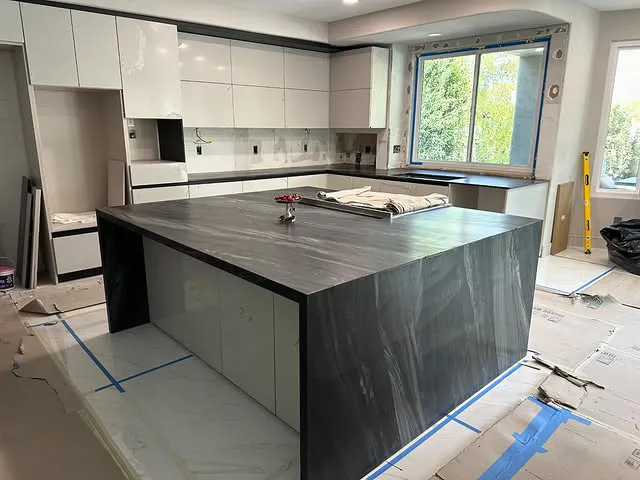
Marble Bathroom Countertops: Custom Installation Guide for Las Vegas Homeowners
Marble bathroom countertops bring timeless elegance and lasting value to Las Vegas homes, but successful installation requires careful material selection, proper fabrication, and professional expertise. Custom marble countertop installation in Las Vegas typically takes 2-3 weeks from initial consultation to completion, with costs varying based on marble type, edge profiles, and bathroom dimensions. Understanding the full process helps you make informed decisions and achieve the luxury bathroom you envision.
The desert climate in Las Vegas presents unique considerations for marble countertop selection and maintenance. You’ll need to evaluate different marble varieties based on durability, water resistance, and how well they withstand the local environment. Working with experienced local fabricators ensures your countertops are properly sealed and installed to handle daily bathroom use.
This guide walks you through every stage of custom marble bathroom countertop installation, from selecting the right stone and understanding fabrication techniques to maintaining your investment for years to come. You’ll learn what to expect during professional installation, how to avoid common pitfalls, and discover current design trends popular among Las Vegas homeowners.

Free Estimate
Get a free estimate for quartz countertops, granite and marble countertops, slab shower walls, and custom stone fabrication in Las Vegas. Our team will review your project, answer your questions, and recommend the best options for your space, style, and budget.
Understanding Marble Bathroom Countertops
Marble brings natural elegance to bathroom spaces through its unique veining patterns and cool surface texture. This natural stone requires careful consideration of its physical properties, maintenance needs, and how it compares to alternative countertop materials before installation.
Essential Characteristics of Marble
Marble forms from crystallized limestone under intense heat and pressure, creating distinctive veining patterns that vary from slab to slab. No two marble pieces look identical.
The stone measures 3-4 on the Mohs hardness scale, making it softer than granite or engineered stone. This softness allows for intricate edge profiles and detailed fabrication work.
Common marble varieties for bathrooms include:
- Carrara: White to blue-gray with soft gray veining
- Calacatta: Bright white with bold, dramatic gold or gray veins
- Statuario: Pure white background with striking gray veining
Marble is naturally porous, which means it absorbs liquids without proper sealing. Standard slab thickness ranges from 2cm to 3cm, with thicker slabs providing better structural stability for bathroom vanities. The stone maintains a cool temperature naturally, which many homeowners find appealing for bathroom surfaces.
Benefits and Drawbacks for Bathroom Use
Marble offers several advantages for bathroom countertops. Its timeless aesthetic increases home value and creates a luxurious atmosphere. The stone remains cool to the touch and reflects light beautifully when polished.
However, you need to understand the maintenance requirements. Marble reacts to acidic substances like toothpaste, perfume, and certain cleaners, which can etch the surface. It stains more easily than engineered stone alternatives without regular sealing.
Water exposure in bathrooms requires resealing every 12-18 months to maintain protection. Soap scum and hard water deposits show more visibly on darker marble varieties. The surface can scratch from sharp objects, though many homeowners find the patina adds character over time.
Marble vs. Other Countertop Materials
Compared to granite, marble provides softer veining and lighter color options but requires more maintenance. Granite rates higher on hardness and resists etching from acidic substances.
Engineered stone products like quartz offer consistent patterns and don’t require sealing. They resist staining better than natural marble but lack the unique character and depth that natural stone provides.
| Material | Hardness | Sealing Required | Heat Resistance | Unique Patterns |
|---|---|---|---|---|
| Marble | Moderate | Yes (annually) | Good | High |
| Granite | High | Yes (less frequent) | Excellent | High |
| Engineered Stone | High | No | Good | Low-Medium |
| Laminate | Low | No | Poor | Medium |
Solid surface materials and laminate cost less but don’t match marble’s visual depth or resale value. Your choice depends on balancing aesthetic preferences with maintenance commitment and budget considerations specific to Las Vegas’s dry climate and water conditions.
Choosing the Right Marble for Your Bathroom
Marble selection involves understanding slab quality, aesthetic preferences, and local pricing factors specific to Las Vegas installations. The right choice balances visual appeal with practical considerations for your bathroom’s specific conditions.
Selecting the Perfect Marble Slab
When evaluating marble slabs, inspect each piece in person rather than relying on small samples. Natural stone varies significantly from slab to slab, even within the same quarry batch.
Check for structural integrity by looking for hairline cracks or fissures that could compromise durability. These imperfections may expand over time, especially in Las Vegas’s temperature fluctuations.
Key inspection points include:
- Consistent thickness throughout the slab (typically 2cm or 3cm)
- Minimal surface pitting or voids
- Clear veining patterns without muddy or cloudy areas
- Proper cutting and edge quality from the supplier
Request to see the entire slab laid flat under proper lighting. This reveals the full pattern and helps you plan where specific sections will appear on your custom countertops. Many Las Vegas fabricators store slabs vertically, which can distort how patterns and colors actually look when installed horizontally.
Color, Pattern, and Finish Options
Carrara marble offers soft gray veining on white backgrounds, providing a classic look that complements most bathroom styles. Calacatta features bolder, more dramatic veining with whiter bases and commands premium pricing.
Emperador brings rich brown tones with intricate veining, while Statuario delivers striking gray veins on bright white. Crema Marfil provides warmer beige tones for bathrooms needing softer aesthetics.
Finish types affect both appearance and maintenance:
| Finish Type | Characteristics | Best For |
|---|---|---|
| Polished | High gloss, reflective surface | Elegant, formal bathrooms |
| Honed | Matte, smooth surface | Minimizing water spots |
| Brushed | Subtle texture, slight sheen | Slip resistance |
Veining patterns should align with your bathroom’s size. Bold, dramatic veining works well in larger spaces, while subtle patterns suit compact bathrooms better. Consider how the pattern flows across seams if your countertop requires multiple slabs.
Budget Considerations for Las Vegas Homeowners
Marble slab prices in Las Vegas typically range from $50 to $200 per square foot, depending on rarity and origin. Carrara and Crema Marfil fall on the lower end, while Calacatta and Statuario command premium prices.
Factor in fabrication costs, which add $40 to $100 per square foot for cutting, edging, and finishing. Custom countertops with intricate edge profiles or cutouts increase labor expenses. Installation adds another $30 to $50 per square foot in the Las Vegas market.
Complete cost breakdown:
- Material (marble slabs): 40-50% of total budget
- Fabrication and custom work: 30-35%
- Installation and sealing: 15-20%
- Edge treatments and finishing: 5-10%
Las Vegas’s dry climate reduces some moisture-related concerns but increases the importance of proper sealing. Budget $200 to $400 for professional sealing during installation and plan for resealing every 12 to 18 months. Some suppliers offer package pricing that bundles materials with fabrication, potentially saving 10-15% compared to separate purchases.
Custom Fabrication and Design Process
After selecting your marble slab, the fabrication phase transforms raw stone into precisely fitted bathroom countertops through digital templating, specialized cutting techniques, and custom edge finishing. Each step requires skilled craftsmanship to ensure your vanity tops meet exact specifications for your Las Vegas bathroom.
Templating and Measurement
A technician visits your home to create digital templates of your existing vanity layout. This process involves measuring the vanity base, marking cutout locations for sinks and faucets, and identifying optimal seam placement if your countertop requires multiple pieces.
The templating team verifies cabinet support structures can handle marble’s weight, typically 13-18 pounds per square foot. They document wall angles, plumbing locations, and any irregularities in your bathroom’s layout. These precise measurements eliminate fitting issues during installation.
Digital templating produces CAD files that guide the fabrication equipment, ensuring accuracy within 1/16 inch. This technology has largely replaced manual templates, reducing measurement errors and improving the fit of custom countertops.
Stone Fabrication Techniques
Fabricators use CNC machines and diamond-blade saws to cut your marble slab according to the digital template. Water-cooled cutting prevents heat damage and controls dust during the process. These machines create sink cutouts, faucet holes, and any required notches for pipes or fixtures.
After cutting, technicians polish the stone surface and prepare seams if your vanity tops require multiple pieces. They inspect the marble for natural fissures or variations that might affect structural integrity. Quality control checks occur throughout fabrication to catch any defects before installation.
Edge Profiles and Detailing
Edge profiles define your countertop’s finished appearance and functionality. Common options for marble bathroom vanity tops include eased edges (slightly rounded), beveled edges (angled cuts), or more decorative profiles like ogee or bullnose.
Your chosen edge receives polishing to match the countertop surface. Fabricators can create undermount sink edges that drop below the counter surface or overmount edges that sit above the sink rim. Each edge style affects water runoff and cleaning requirements.
The edge thickness typically ranges from 2-3 centimeters for standard installations, though laminated edges can create the appearance of thicker stone countertops without added weight or cost.
Professional Installation Step-by-Step
Professional marble countertop installation involves precise measurements, careful handling of marble slabs, and expert execution across multiple phases. The process transforms your bathroom through meticulous preparation, custom cutting, secure mounting, and protective finishing.
Site Preparation and Demolition
Your installer begins by protecting surrounding surfaces with drop cloths and masking tape to prevent damage during demolition. The existing countertop gets carefully removed, along with any attached sinks and fixtures. Installers disconnect plumbing lines and set aside hardware for potential reuse.
The cabinet surfaces receive thorough cleaning to remove old adhesive residue and debris. Your installer checks cabinet levels using a precision level tool, shimming where necessary to create a perfectly flat foundation. Any structural issues with the cabinetry get addressed before proceeding.
A plywood substrate gets cut to exact cabinet dimensions and secured with screws. This base layer distributes the marble’s weight evenly across the cabinet structure and provides a stable mounting surface. The substrate must be completely level, as any irregularities will transfer to the finished countertop.
Cutting, Fitting, and Sink Cutouts
Installers create detailed templates using thin plywood or specialized templating materials that capture every contour of your bathroom space. These templates account for wall irregularities, appliance placements, and fixture locations. The template gets transferred to the marble slab at the fabrication shop.
A wet saw equipped with a diamond blade cuts the marble following the template specifications. Water continuously flows over the blade during cutting to reduce dust and prevent heat damage to the stone. Your fabricator handles the marble slabs with care to avoid chips or cracks along cut edges.
Sink cutouts require exceptional precision. The installer marks the exact sink dimensions on the marble, then uses specialized tools to create the opening. For undermount sinks, the cutout edges get polished smooth. The hole positioning ensures proper clearance for plumbing connections while maintaining structural integrity around the opening.
Edge profiles get shaped according to your specifications, whether you selected eased, beveled, or ogee edges. Each edge receives thorough polishing to achieve a smooth, professional finish.
Installation and Leveling
Installers perform a dry fit of the marble pieces in your bathroom to verify measurements and identify any needed adjustments. This critical step catches potential issues before adhesive application. Seams between multiple pieces get checked for tight alignment.
A high-strength epoxy adhesive gets applied evenly across the plywood substrate in a thin, consistent layer. Your installer works quickly to position the marble before the adhesive begins setting. The stone gets lowered carefully into place and pressed firmly against the substrate.
Installers use levels in multiple directions to confirm the countertop sits perfectly flat. Clamps hold the marble steady while the adhesive cures. Shims make minor height adjustments if needed. For multi-piece installations, seam joints receive color-matched epoxy that gets tooled smooth and level with the surface.
Sealing and Finishing
Once the adhesive fully cures, installers clean the marble surface thoroughly to remove dust, fingerprints, and residue. A penetrating marble sealer gets applied in an even coat across the entire surface. This sealer soaks into the stone’s pores, creating a protective barrier against moisture and staining.
The sealer requires a specific dwell time listed in the manufacturer’s instructions before buffing. Your installer wipes away excess sealer and applies a second coat for enhanced protection. Bathroom marble benefits from this extra sealing layer due to constant moisture exposure.
Sink cutouts receive careful caulking with silicone around the sink rim to create a watertight seal. Plumbing fixtures get reconnected and tested for leaks. Installers apply a final polish to bring out the marble’s natural luster and remove any remaining haze from the sealing process.
Maintenance and Long-Term Care
Marble bathroom countertops need consistent care to stay beautiful in Las Vegas’s dry climate and hard water conditions. A proper cleaning routine, protective measures, and timely resealing will preserve the natural stone surface for decades.
Cleaning Tips for Marble Countertops
Use a soft microfiber cloth with warm water and a pH-neutral cleaner designed for natural stone. Clean your marble countertops daily to remove toothpaste, soap residue, and cosmetic products before they penetrate the porous surface.
Avoid cleaners containing vinegar, lemon juice, ammonia, or bleach. These acidic and alkaline substances etch marble by dissolving calcium carbonate in the stone, leaving dull spots that cannot be removed with standard cleaning.
Daily cleaning steps:
- Wipe surfaces with pH-neutral cleaner
- Rinse with clean water
- Dry completely with a soft cloth
- Check for water pooling near faucets
Blot spills immediately rather than wiping them across the surface. Las Vegas hard water leaves mineral deposits quickly, so drying your countertops after each use prevents white rings and cloudy buildup.
For stubborn soap scum, apply a marble-safe cleaner and let it sit for two minutes before wiping. Never use abrasive pads or powders that scratch the polished finish.
Protecting Against Stains and Damage
Place trays under all bottles, cosmetics, and toiletries to catch drips before they contact the marble surface. Hair dye, nail polish, and makeup contain pigments that stain natural stone permanently if not cleaned within minutes.
Use coasters or silicone mats under hot styling tools. Direct heat from curling irons or straighteners can discolor marble and damage the sealant layer.
Protective measures:
- Keep acidic products away from marble
- Use cutting boards, never cut directly on stone
- Wipe up toothpaste and mouthwash immediately
- Install splash guards near sinks
Las Vegas water contains high mineral content. Installing a water softener reduces calcium buildup on your countertops and extends the time between deep cleanings.
Apply a penetrating sealer within 24 hours of installation. Quality sealers fill microscopic pores in the marble, giving you extra time to clean spills before staining occurs.
When to Reseal and Professional Services
Reseal your marble countertops every 6 to 12 months in bathroom environments. High humidity and frequent water exposure break down sealers faster than in kitchens or living areas.
Test your seal by placing a few drops of water on the surface. If water beads up, the seal remains effective. If water absorbs within five minutes, schedule resealing immediately.
Professional stone restoration becomes necessary when DIY methods fail. Deep etching, widespread staining, or loss of polish require diamond abrasives and specialized compounds that only trained technicians should apply.
When to call professionals:
- Etching covers more than 10% of the surface
- Stains remain after poultice treatment
- Cracks appear in the stone
- You need honing or repolishing
Schedule professional cleaning and resealing every two to three years. Technicians use commercial-grade sealers that last longer and provide better stain resistance than consumer products. They can also repair minor chips and restore uniform sheen across your marble countertops.
Design Inspiration and Trends in Las Vegas
Las Vegas bathroom design balances luxury aesthetics with practical considerations for the desert climate. Current trends favor warm, earthy tones in marble selections, spa-inspired layouts, and materials that withstand low humidity conditions.
Popular Bathroom Vanity Styles
Modern floating vanities paired with marble countertops dominate Las Vegas installations. These wall-mounted designs create visual space in bathrooms while showcasing the natural beauty of marble surfaces. The floating style works particularly well with white Carrara or Calacatta marble for contemporary homes.
Traditional vanities with furniture-style legs remain popular in Mediterranean and Tuscan-inspired Las Vegas properties. Darker marble varieties like emperador or black marble complement these classic designs. You can incorporate decorative edge profiles on your marble countertop to enhance the traditional aesthetic.
Double vanity configurations have become standard in master bathrooms. This layout typically requires 60 to 72 inches of linear space and provides practical benefits for couples. The same marble you select for your bathroom vanity can extend to your kitchen countertops to create design continuity throughout your home.
Integrating Marble with Other Materials
Combining marble with wood creates warmth that balances the stone’s cool elegance. Walnut and oak cabinetry paired with white or beige marble produces a balanced look suited to Las Vegas interiors. The wood grain adds texture while the marble provides luxury and durability.
Metal fixtures in brushed gold, matte black, or bronze complement marble’s natural veining. These finishes have gained popularity in Las Vegas bathrooms during 2025 and 2026. Avoid mixing too many metal finishes in one space.
Quartz or granite backsplashes can reduce costs when paired with marble countertops. This combination maintains a high-end appearance while managing your budget. You might use marble for the vanity top and a coordinating engineered stone for surrounding walls.
Local Design Considerations and Climate Impact
Las Vegas’s dry climate requires proper sealing of marble surfaces to prevent moisture loss from the stone itself. Apply sealer every 6 to 12 months rather than the typical annual schedule recommended in humid climates. The low humidity can cause certain sealers to degrade faster.
Desert dust infiltration affects surface maintenance schedules. Daily wiping with a damp microfiber cloth prevents abrasive particle buildup that can dull marble’s polish. Install quality exhaust fans to manage the limited moisture from showers.
Natural light intensity in Las Vegas can highlight marble veining beautifully but may cause heat buildup near windows. Position vanities away from direct afternoon sun exposure when possible. Light-colored marbles reflect heat better than dark varieties in spaces with western exposure.
Frequently Asked Questions
Las Vegas homeowners considering marble bathroom countertops often have questions about costs, installation requirements, and long-term care. Understanding these practical details helps you make informed decisions about materials, contractors, and maintenance.
How much does a marble bathroom countertop typically cost in Las Vegas?
Marble bathroom countertops in Las Vegas range from $1,500 to $4,500 for a standard vanity installation. The total price depends on the marble type, countertop size, edge profile complexity, and whether you need backsplashes or integrated sinks.
High-end marble varieties like Calacatta or Statuario cost more than Carrara or other common types. Your final price includes material costs, fabrication, template creation, and professional installation.
Local fabricators may offer different pricing structures. Some charge per square foot while others provide project-based quotes that bundle all services together.
What is the average cost per square foot to fabricate and install marble countertops?
Marble fabrication and installation in Las Vegas typically costs between $60 and $120 per square foot. This price includes cutting, edge profiling, polishing, templating, and installation labor.
Basic marble varieties with simple edges start around $60 to $75 per square foot. Premium marble with complex edge profiles or waterfall edges can reach $100 to $120 per square foot or higher.
Material costs represent roughly 40-50% of the total price. The remaining costs cover fabrication labor, equipment usage, transportation, and installation expertise.
When is professional installation recommended for a marble vanity top?
You should hire professional installers for any marble bathroom countertop project. Marble slabs are heavy, fragile, and require specialized tools for proper fitting and sealing.
Professional fabricators ensure accurate templating, which prevents costly errors and material waste. They handle the precise measurements needed for plumbing cutouts, faucet holes, and proper alignment with your vanity cabinet.
Licensed installers also provide warranties on their workmanship. They understand how to properly support marble spans, apply sealers correctly, and address potential issues with cabinet levelness or wall irregularities.
What edge profiles and thicknesses are best for marble bathroom countertops?
Standard marble bathroom countertops are 2cm or 3cm thick. The 3cm thickness provides better durability and requires less support, making it the preferred choice for bathroom vanities.
Popular edge profiles for marble bathrooms include eased, beveled, and half-bullnose edges. These profiles work well in most bathroom styles and are easier to keep clean than ornate edges.
You can select more decorative edges like ogee or dupont for traditional or elegant bathroom designs. Simple edges cost $10 to $15 per linear foot while complex profiles add $20 to $40 per linear foot to your total cost.
How should the vanity cabinet be prepared and leveled before countertop installation?
Your vanity cabinet must be level within 1/8 inch across its entire span before marble installation. Installers use shims to adjust cabinet height and ensure proper leveling in all directions.
The cabinet should be securely fastened to wall studs and able to support the marble weight. A typical 3cm marble countertop weighs approximately 18-20 pounds per square foot.
Remove old countertops completely and repair any water damage to the cabinet structure. Check that the cabinet top surface is clean, dry, and free from debris that could prevent proper adhesion or create weak points.
What sealing and maintenance schedule helps prevent staining and etching in marble bathrooms?
Seal your marble bathroom countertop immediately after installation and reapply sealer every 6 to 12 months. You can test if resealing is needed by placing water drops on the surface—if they absorb within 10 minutes, apply new sealer.
Clean marble daily with pH-neutral cleaners specifically formulated for natural stone. Avoid acidic cleaners, vinegar, or abrasive products that cause etching and dull the polished surface.
Wipe up spills immediately, especially from toiletries, cosmetics, and personal care products. These substances can stain marble or cause chemical etching if left on the surface for extended periods.
0 comments