
How to Choose the Best Kitchen Countertop Material for Your Las Vegas Home
Choosing the right kitchen countertop material for your Las Vegas home requires balancing aesthetics, durability, and budget while considering the unique demands of the desert climate. The best countertop material depends on your cooking habits, maintenance preferences, heat and stain resistance needs, and design vision. With options ranging from natural stone like granite and marble to engineered surfaces like quartz and alternative materials like concrete, you need to understand how each performs in Las Vegas conditions.
Your kitchen countertop is one of the most visible and heavily used surfaces in your home. It must withstand daily food preparation, resist heat from cookware, and maintain its appearance despite Las Vegas’s dry climate and hard water. The material you select will affect not only your kitchen’s functionality but also your home’s resale value and your daily cooking experience.
This guide walks you through the essential factors to consider when selecting countertop materials, explores popular and alternative options suited to Las Vegas homes, and helps you evaluate practical considerations specific to the local environment. You’ll learn how different materials compare in terms of style, customization, and long-term performance so you can make an informed decision.
Key Factors in Choosing Kitchen Countertops
Selecting the best countertop material for your kitchen renovation requires evaluating durability, maintenance needs, and budget constraints. Each material offers different combinations of these characteristics that will affect your daily use and long-term satisfaction.
Durability and Longevity
When choosing durable countertops, you need to consider how the material withstands daily wear. Granite and quartzite rank among the most scratch-resistant options, handling knife marks and impacts without showing damage. These natural stones can last decades when properly maintained.
Quartz engineered stone offers strong resistance to staining but scratches more easily than granite. The material holds up well to typical kitchen use but requires cutting boards to prevent surface damage.
Heat resistance matters in active kitchens. Granite, marble, soapstone, and concrete handle hot pots without damage, while quartz and laminate surfaces can warp or discolor from direct heat exposure. Stainless steel provides maximum heat resistance but shows scratches easily.
Material Lifespan Comparison:
- Granite, marble, and quartzite: 25+ years
- Quartz and solid-surface: 15-25 years
- Laminate: 10-15 years
- Wood: 20+ years with proper maintenance
Maintenance and Care Requirements
Your maintenance commitment varies significantly by material. Granite, marble, and concrete need resealing every 1-5 years to prevent stains and moisture damage. Soapstone requires monthly mineral oil applications during the first year to develop its protective patina.
Quartz and laminate require minimal upkeep beyond regular cleaning. Their non-porous surfaces resist mold, mildew, and bacteria without sealing. You can clean these materials with soap and water for daily maintenance.
Wood countertops demand the most attention. You must oil them regularly and reseal every 2-3 years to prevent moisture absorption and bacterial growth. The porous nature of wood makes it vulnerable to staining if spills aren’t cleaned promptly.
Cost and Budget Considerations
The best kitchen countertop material for your budget depends on both material and installation costs. Laminate ($20-$80 per square foot) and ceramic tile ($18-$29 per square foot) offer the most affordable options for DIY installation.
Mid-range materials include granite ($40-$100), quartz ($50-$200), and solid-surface ($50-$150) per square foot. These require professional installation, adding to total costs.
Premium options like recycled materials ($60-$250), quartzite ($60-$210), and stainless steel ($80-$200) per square foot represent significant investments. Consider your kitchen renovation budget alongside expected lifespan when comparing materials. A $40 granite countertop lasting 25+ years may cost less long-term than a $20 laminate surface needing replacement after 10 years.
Popular Kitchen Countertop Materials for Las Vegas Homes
Las Vegas homeowners typically choose from three primary engineered stone and natural stone options that balance durability with visual appeal. Quartz, granite, and marble each perform differently in the desert climate and offer distinct advantages for kitchen renovations.
Quartz Countertops Overview
Quartz countertops consist of approximately 90-95% ground natural quartz crystals combined with polymer resins and pigments. This engineered stone delivers consistency in pattern and color that natural stone cannot match.
The non-porous surface resists staining without requiring any sealing maintenance. You can spill wine, coffee, or oil without worrying about permanent damage if you wipe it up within a reasonable timeframe.
Key advantages of quartz include:
- No sealing required ever
- Uniform appearance across slabs
- Resistant to scratches from normal kitchen use
- Available in colors not found in nature
Quartz performs well in Las Vegas homes because it withstands heat up to about 300°F, though you should still use trivets for hot pans. The material costs between $60-$150 per square foot installed, depending on the brand and pattern complexity.
Granite Countertops in Depth
Granite countertops are cut directly from quarried natural stone, making each slab unique in pattern and veining. This natural stone has been a popular choice for decades due to its proven durability and heat resistance.
You need to seal granite every 1-2 years to maintain its stain resistance, though darker colors typically require less frequent sealing than lighter ones. The material handles the temperature extremes common in Las Vegas homes without cracking or degrading.
Granite resists scratching better than most materials and tolerates hot pots directly from the stove. The stone remains cool to the touch, which benefits bakers working with dough.
Pricing ranges from $40-$200 per square foot installed based on the rarity of the stone pattern and country of origin. Common varieties like Santa Cecilia or Ubatuba cost less than exotic imports.
Marble Countertops and Design
Marble countertops provide a luxury aesthetic with distinctive veining that homeowners recognize immediately. Carrara, Calacatta, and Statuario represent the most sought-after varieties for kitchen installations.
This natural stone is softer and more porous than granite, making it susceptible to etching from acidic substances like lemon juice or vinegar. You must seal marble every 3-6 months and clean spills quickly to prevent permanent staining.
The surface stays naturally cool, which professional bakers prefer for working with pastry dough. Marble develops a patina over time that some homeowners embrace as character while others view as wear.
Expect to pay $75-$250 per square foot installed for marble countertops. The material requires more careful maintenance than quartz or granite, but it delivers unmatched elegance for homeowners prioritizing aesthetics over practicality.
Alternative and Trendy Countertop Options
Beyond traditional granite and quartz, several alternative materials offer distinct aesthetics and performance characteristics that work particularly well in Las Vegas kitchens. These options range from warm wood surfaces to industrial concrete, each bringing unique benefits for homeowners seeking something different.
Butcher Block and Wood Countertops
Butcher block countertops bring natural warmth and texture to kitchen spaces through strips of hardwood bonded together. Maple, walnut, and oak are the most common wood species used, with each offering different grain patterns and color tones.
Wood countertops excel as prep surfaces since you can cut directly on them, and they’re easily repairable through sanding and refinishing. However, they require regular maintenance including oiling every few months to prevent drying and cracking, which is especially important in Las Vegas’s low-humidity climate.
These surfaces are porous and vulnerable to water damage, so you’ll need to seal spills quickly and avoid prolonged moisture exposure. Heat resistance is moderate—you can place warm items briefly, but hot pots can scorch the wood.
Butcher block works best as island countertops or designated prep zones rather than near sinks. The cost typically ranges from $40 to $100 per square foot installed, making it a mid-range option that adds character to modern or rustic kitchen designs.
Soapstone and Natural Stone Surfaces
Soapstone countertops offer a smooth, matte surface with a distinctive charcoal or slate appearance that develops a rich patina over time. This natural stone is denser than marble but softer than granite, giving it excellent heat resistance while remaining workable during fabrication.
The material is non-porous when treated with mineral oil, providing good stain resistance for everyday kitchen use. Unlike other natural stone countertops, soapstone doesn’t require sealing, though periodic oiling enhances its darker color and evens out the natural darkening process.
You should expect some scratching since soapstone ranks lower on the hardness scale—around 2.5 to 3.5 on the Mohs scale. Light scratches are visible but can be buffed out with sandpaper and oil. Many homeowners appreciate this lived-in aesthetic as part of the material’s character.
Soapstone costs between $70 and $120 per square foot installed. The stone’s ability to handle Las Vegas’s temperature fluctuations without damage makes it reliable for homes with varying indoor climates.
Concrete and Modern Surface Materials
Concrete countertops deliver a customizable, industrial aesthetic with the ability to incorporate pigments, aggregates, and unique edge profiles. You can create completely custom shapes, embedded drainboards, and integrated sinks that aren’t possible with stone slabs.
The material offers excellent heat resistance and durability when properly reinforced with steel mesh or fiber. However, concrete is porous and requires sealing every one to three years to prevent staining. Hairline cracks may develop over time, though many consider these part of the material’s character.
Engineered quartz alternatives are also gaining popularity as modern surface materials, combining the durability of natural quartz with resin binders. These surfaces resist stains and scratches better than concrete while requiring minimal maintenance.
Concrete countertops cost $65 to $135 per square foot depending on customization level and finish complexity. The weight requires proper cabinet support, and installation demands experienced fabricators. Las Vegas’s dry climate actually benefits concrete curing, though proper sealing remains essential to protect against the occasional spill in your kitchen.
Practical Considerations for Local Climate and Usage
Las Vegas’s extreme heat, intense UV exposure, and active family lifestyles create specific demands for kitchen countertops that differ from homes in milder climates. Selecting materials that withstand these conditions while meeting your household’s daily needs ensures long-term satisfaction with your kitchen design.
Heat and Sun Exposure in Las Vegas
Las Vegas summers bring extreme temperatures that can reach 115°F outdoors, and south-facing windows can heat countertops considerably. Engineered stone like quartz performs well in most situations but requires caution with direct heat exposure from pots and pans. Always use trivets to protect the surface, especially in kitchens with large windows.
Granite and quartzite offer superior heat resistance for homeowners who frequently place hot cookware directly on counters. These natural stones won’t scorch or discolor from brief contact with heated items.
Prolonged UV exposure through windows can fade or yellow certain materials over time. Quartz countertops may experience discoloration in areas receiving constant direct sunlight. Installing window treatments or UV-protective film helps prevent this issue. Granite remains stable under UV exposure and won’t change color regardless of sun intensity.
Scratch and Stain Resistance
Active kitchens need surfaces that maintain their appearance despite daily wear from meal preparation, serving, and cleanup. Quartz ranks among the most scratch-resistant options, making it ideal for families who use counters heavily without excessive caution. Its non-porous surface also prevents staining from wine, oils, and acidic foods.
Granite provides excellent scratch resistance but requires regular sealing to maintain stain protection. Without proper sealing, porous natural stone can absorb liquids and develop permanent marks. A honed finish on granite or quartz reduces visible scratches better than polished surfaces while maintaining a sophisticated appearance.
Marble looks beautiful but scratches easily and etches when exposed to lemon juice, vinegar, or common cleaning products. It demands more careful use than most households can realistically maintain.
Suitability for Family Kitchens
Busy households with children need durable countertops that resist damage and require minimal maintenance. Quartz countertops eliminate sealing requirements and clean easily with soap and water, making them practical for families without time for specialized care routines.
Butcher block adds warmth to kitchen design but needs regular oiling and shows scratches from knives and dropped items. Families who cook frequently may find this maintenance burdensome. Laminate and solid surface materials offer budget-friendly options but lack the durability and resale value of quartz or granite.
Consider how you actually use your kitchen. Families who bake often benefit from granite’s natural coolness for working with dough. Households that entertain regularly appreciate quartz’s consistent appearance and resistance to stains from spilled drinks.
Comparing Styles and Customization Opportunities
Different countertop materials offer varying degrees of design flexibility, from edge treatments to color selections. Understanding these options helps you create a kitchen that matches your vision while staying within practical constraints.
Color, Pattern, and Finish Choices
Laminate countertops and Formica provide the widest color range, with hundreds of patterns including wood grain, stone looks, and solid colors. You can find options mimicking marble, granite, or concrete at a fraction of the cost. These materials come in matte, glossy, or textured finishes.
Solid surface countertops like Corian offer nearly limitless color possibilities since the material is manufactured. You can select from solid hues, speckled patterns, or designs with subtle veining. The color runs through the entire thickness, making scratches less visible.
Glass countertops deliver a contemporary aesthetic with back-painted options in any color you choose. You can opt for clear, frosted, or textured glass with embedded materials for visual interest.
Stainless steel countertops maintain a consistent metallic appearance with either brushed or mirror finishes. The material works well in modern or industrial-style kitchens but offers limited color variation.
Natural stone and engineered materials provide their own pattern variations, from dramatic veining to subtle flecks, though your selection depends on available slabs.
Edge Profiles and Installation Options
Edge profiles significantly impact your countertop’s final appearance. Laminate countertops typically feature basic edges like square or slightly rounded profiles due to the material’s construction. Some manufacturers offer decorative edge strips that mimic more expensive materials.
Solid surface countertops like Corian accept nearly any edge design since fabricators can shape and route the material. Popular choices include beveled, bullnose, ogee, and waterfall edges. You can even create custom profiles or integrate seamless coved backsplashes.
Glass countertops usually come with polished or beveled edges for safety and aesthetics. Stainless steel countertops feature marine edges that prevent water from dripping off the surface, or you can choose flat edges with a slight upturn.
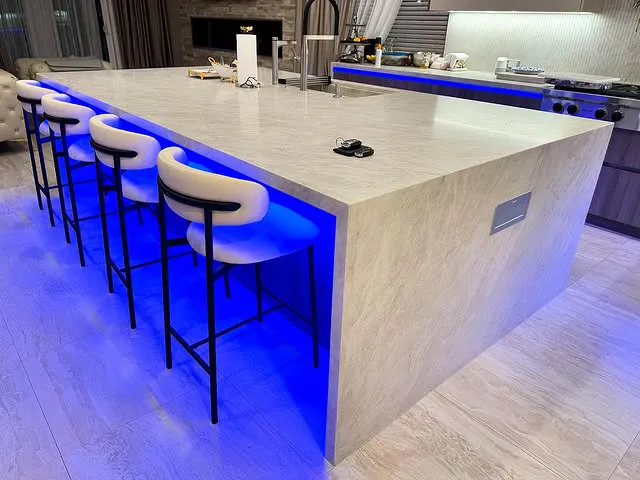
Most types of countertops allow for undermount or drop-in sink installations, though laminate works best with drop-in sinks due to moisture concerns. Consider waterfall edges for islands to showcase dramatic patterns or create visual continuity in open floor plans.
Frequently Asked Questions
Las Vegas homeowners face unique considerations when selecting countertop materials, from extreme temperature fluctuations to the dry desert climate that affects how materials perform over time. Understanding which surfaces handle daily wear, retain their value, and require minimal upkeep helps you make a choice that works for your specific needs.
Which countertop materials perform best in Las Vegas heat and dry conditions?
Quartz and granite handle Las Vegas heat exceptionally well. The low humidity in the desert reduces moisture-related issues that affect some materials in other climates.
Granite naturally resists thermal expansion from temperature changes. The dry air also means you won’t deal with moisture absorption problems that plague more humid regions.
Quartz maintains its engineered consistency regardless of climate conditions. The non-porous surface prevents the drying and cracking that can occur with some natural stones in arid environments.
Porcelain performs reliably in extreme heat. Its manufacturing process creates a surface that withstands thermal stress without warping or discoloration.
Marble requires more attention in Las Vegas conditions. The dry air can make sealing even more important, as the stone may absorb spills more readily when humidity levels drop.
How do quartz, granite, marble, and porcelain compare in durability and maintenance?
Quartz requires only daily wiping with mild soap and water. You never need to seal it, but you must avoid placing hot pots directly on the surface as extreme heat can damage the resin binders.
Granite needs annual sealing to maintain its stain resistance. It handles heat well and resists scratches, but acidic substances like lemon juice can etch the surface if left too long.
Marble demands the most maintenance of these four materials. You should seal it every 6-12 months and clean spills immediately, as it etches easily from acids and stains from oils or wine.
Porcelain stands out as nearly maintenance-free. It resists heat, scratches, and stains without requiring any sealant, and you only need mild cleaners for routine care.
What countertop material offers the best balance of cost, longevity, and appearance?
Granite provides strong value across all three factors. Installation typically costs $40-200 per square foot, it lasts decades with proper care, and offers natural beauty with unique patterns in every slab.
Quartz delivers excellent longevity and consistent appearance at $50-160 per square foot. The uniform look appeals to modern design preferences, and its durability means you won’t face replacement costs for many years.
Porcelain offers competitive pricing at $80-180 per square foot with superior durability. The material resists damage better than most alternatives, though you may have fewer edge profile options.
Quartzite sits at the higher end ($80-200 per square foot) but combines natural stone aesthetics with hardness exceeding granite. If you want a natural look with maximum durability, the investment pays off over time.
Which surfaces are most resistant to stains, scratches, and heat from everyday cooking?
Porcelain resists all three threats effectively. You can place hot pans directly on it, cut on it without damage (though this dulls knives), and spill coffee or wine without worry.
Quartz handles stains and scratches well due to its non-porous engineered surface. Heat remains its only weakness, requiring trivets or hot pads for cookware above 300°F.
Quartzite matches or exceeds granite in all categories. Its extreme hardness prevents scratching, sealed surfaces resist stains, and the natural stone tolerates high heat without damage.
Granite resists heat and scratches admirably. When properly sealed, it repels most stains, though you should still wipe up acidic spills promptly to avoid etching.
Marble performs poorly against all three. It scratches easily, stains from many common foods and drinks, and etches when exposed to acids or high heat.
How do different countertop materials impact home resale value in the Las Vegas market?
Granite remains the standard that Las Vegas buyers expect in mid-range to luxury homes. Its presence signals quality without raising questions, making it a safe choice for resale-focused renovations.
Quartz has gained strong acceptance among buyers seeking modern aesthetics. Many Las Vegas homebuyers view it as equal to or better than granite, particularly younger demographics who value low maintenance.
Marble adds luxury appeal in high-end properties. In the Las Vegas luxury market, marble countertops can elevate perceived value, though buyers understand the maintenance requirements.
Porcelain remains less familiar to many buyers. While it performs excellently, you may need to educate potential buyers about its benefits, which can complicate sales conversations.
Quartzite attracts buyers looking for premium natural stone. In upscale Las Vegas neighborhoods, quartzite countertops contribute to higher home valuations similar to marble.
What maintenance routines and sealing requirements should I expect for each material?
Granite requires sealing once per year in most cases. Test the seal by placing a few drops of water on the surface—if they bead up, the seal remains effective. Clean daily with mild dish soap and water, avoiding harsh chemicals or abrasive cleaners.
Quartz needs no sealing at any point. Wipe surfaces daily with a soft cloth and gentle cleaner, and remove spills promptly to prevent temporary staining from substances like wine or oil.
Marble demands sealing every 6-12 months depending on use frequency. Clean immediately after food preparation, use coasters under all drinks, and apply only pH-neutral cleaners designed specifically for natural stone.
Porcelain requires no sealing or special products. Clean with any mild household cleaner and a soft cloth, though you should avoid abrasive pads that might dull the finish over time.
Quartzite needs annual sealing similar to granite. Perform the water bead test yearly, use cutting boards to prevent microscopic scratches, and place trivets under hot cookware even though the stone tolerates heat well.
Soapstone benefits from periodic mineral oil application to enhance its natural darkening patina. You can apply oil monthly when new, then reduce to every few months once you achieve your desired appearance.