
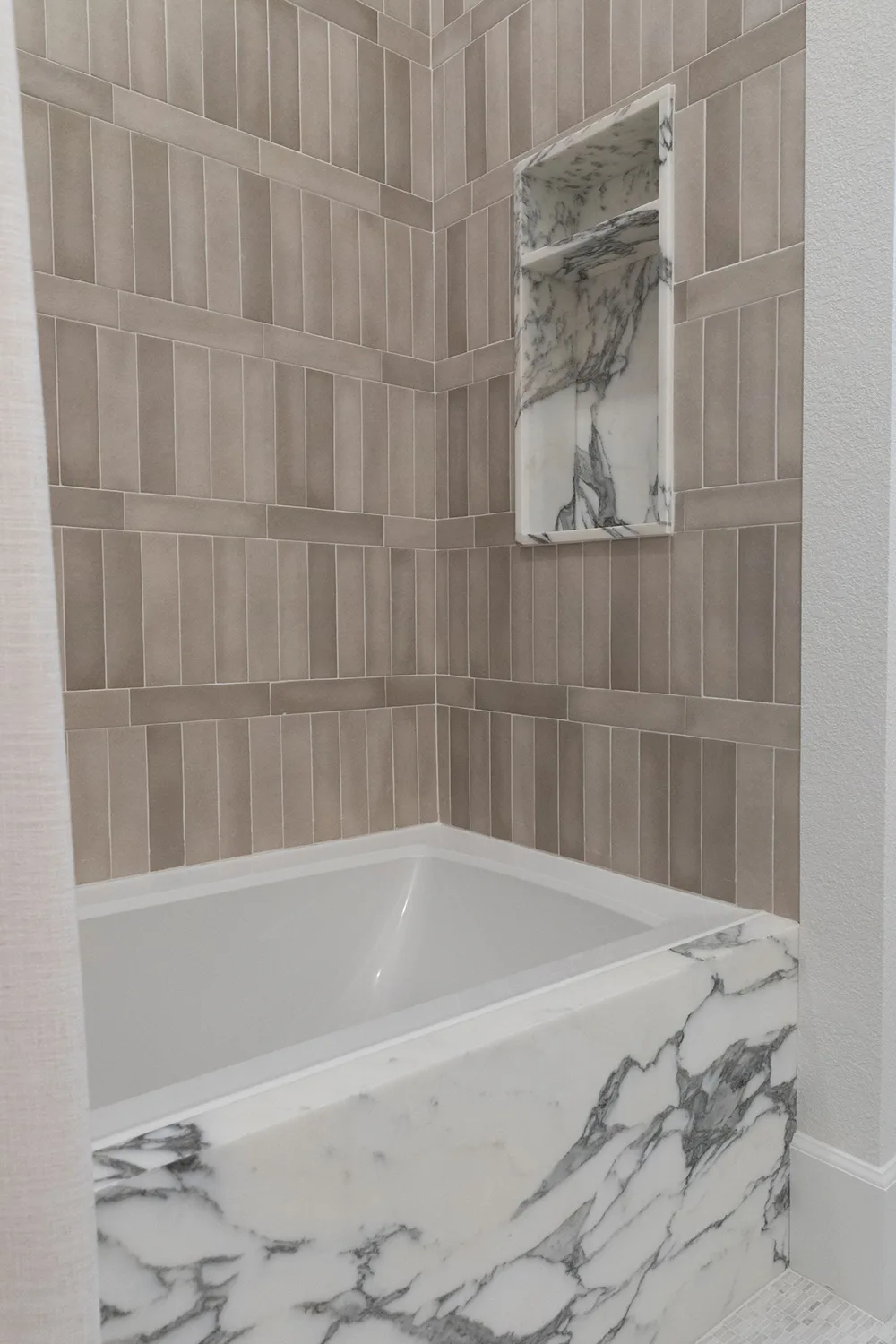
Shower Panels vs. Tile: Which Is the Better Choice for Your Las Vegas Bathroom?
Choosing between shower panels and tile for your Las Vegas bathroom affects everything from your remodel budget to how much time you’ll spend cleaning. Both options waterproof your shower walls, but they differ significantly in installation speed, maintenance requirements, design flexibility, and long-term durability. Understanding these differences helps you make a choice that aligns with your priorities and your home’s specific needs.
Tile showers offer extensive design customization and a traditional high-end appearance, while shower panels provide faster installation, lower maintenance, and better resistance to moisture issues—all without grout lines. Your decision depends on whether you prioritize aesthetic variety or practical efficiency. Las Vegas homes face unique challenges like hard water and dry climate conditions that can influence which material performs better over time.
This guide breaks down the costs, maintenance demands, durability factors, and ideal use cases for both shower panels and tile. You’ll learn which option suits different bathroom types, what to expect during installation, and how each choice impacts your home’s value. By the end, you’ll know exactly which shower wall system makes sense for your Las Vegas bathroom remodel.
Free Estimate
Get a free estimate for quartz countertops, granite and marble countertops, slab shower walls, and custom stone fabrication in Las Vegas. Our team will review your project, answer your questions, and recommend the best options for your space, style, and budget.
Understanding Shower Panels and Tiles
Shower panels are large-format wall coverings made from engineered materials, while tiles are individual units of ceramic, porcelain, or stone set with grout. These two approaches differ in construction method, installation process, and long-term maintenance requirements.
What Are Shower Panels?
Shower wall panels are large, prefabricated sheets designed to cover your shower walls in continuous sections. Manufacturers produce these panels from materials like acrylic, PVC, solid surface composites, or laminate. A standard shower typically requires only three to five panels to cover all walls.
Most shower panels measure 8 feet tall and 4 feet wide, though sizes vary by manufacturer. The panels attach directly to your existing walls or waterproofed backer boards using adhesive and mechanical fasteners. The seams between panels are sealed with silicone or specialized joining strips to create a watertight barrier.
These panels feature nonporous surfaces that resist water infiltration without requiring additional sealants. You can find shower panels in solid colors, stone patterns, tile looks, and textured finishes. Some manufacturers offer coordinating back walls and side panels that eliminate visible seams entirely.
What Are Bathroom Tiles?
Bathroom tiles are individual units made from ceramic, porcelain, natural stone, or glass that you install piece by piece to create your shower walls. Each tile typically ranges from 4×4 inches to 12×24 inches, though you can find smaller mosaics and larger format options. Your installer sets these tiles into thin-set mortar over a waterproofed substrate.
Porcelain tiles offer the highest water resistance due to their dense composition and low absorption rate. Ceramic tiles cost less but absorb more moisture than porcelain. Natural stone options like marble, travertine, and slate provide unique patterns but require periodic sealing to maintain water resistance.
After setting the tiles, your installer fills the joints with grout—a cement-based or epoxy material that locks the tiles together. The grout lines become a defining visual feature of tile showers and require regular maintenance to prevent staining and mildew growth.
How Shower Panels Differ from Tile Showers
The primary difference lies in the number of seams and joints exposed to water. Shower panels create fewer penetration points because each panel covers a large surface area. Traditional tile showers have hundreds of grout lines that can trap moisture if not properly sealed and maintained.
Installation time separates these options significantly. Your contractor can install shower wall panels in one day for a standard shower, while tile showers require multiple days for substrate preparation, setting, grouting, and curing. Tile installation demands skilled labor to ensure proper waterproofing and level placement.
Material composition affects repairability differently. If you damage a shower panel, you typically replace the entire panel section. With tile showers, you can replace individual damaged tiles, though matching older tiles or grout colors presents challenges. Panel systems rely on manufacturer availability for replacement parts, while tile allows for spot repairs.
Key Differences: Shower Panels vs. Tile in Las Vegas Bathrooms
Shower panels and tiles differ fundamentally in how they’re installed, how they handle moisture, and what design options they offer. These differences directly impact your renovation timeline, long-term maintenance, and the final look of your Las Vegas bathroom.
Installation Process and Complexity
Panel installation typically takes one day for a standard shower. You can attach panels directly to existing walls or waterproofed backerboards using adhesives and mechanical fasteners. The seams get sealed with silicone or manufacturer-specified caulking to create a watertight barrier.
Tile installation requires multiple steps spread over several days or weeks. You need substrate preparation, waterproof membrane application, tile setting with thinset mortar, grout application, and a curing period. Each step must be completed correctly to prevent water damage.
Shower panels require basic tools and less specialized knowledge. You’ll need a saw for cutting, adhesive, and sealant. Tile work demands more expertise: mixing thinset to the right consistency, maintaining proper spacing, ensuring level surfaces, and applying grout without voids or gaps.
The Las Vegas climate affects installation timing for both options. Low humidity accelerates drying times for tile adhesives and grout, which can be beneficial but requires careful moisture management during application.
Waterproofing and Moisture Resistance
Shower panels are manufactured from nonporous materials like acrylic, PVC, or solid surface composites. They create fewer seams than tile, reducing potential water entry points. When properly sealed at joints and penetrations, panels provide immediate waterproofing without additional membranes.
Tile waterproofing depends entirely on what’s beneath the tile. You need a continuous waterproof membrane—either sheet membrane or liquid-applied products—installed on the substrate before tile setting. The grout between tiles is porous and allows water penetration without proper sealing.
Grout lines are the weakest point in tile showers. Even sealed grout degrades over time from cleaning products and water exposure. Natural stone tiles require additional sealing because the stone itself is porous and absorbs moisture.
Las Vegas hard water adds another consideration. Mineral deposits build up faster on grout lines than on smooth panel surfaces. This affects both waterproofing integrity and appearance over time.
Design Flexibility and Aesthetics
Tiles offer extensive customization options. You can choose from ceramic, porcelain, glass, or natural stone tiles in countless sizes, shapes, colors, and textures. Stone tiles like marble, travertine, or slate create luxury aesthetics with unique veining patterns. You can design custom layouts, borders, accent walls, or intricate mosaics.
Shower panels come in preset designs that mimic stone, solid colors, or textured finishes. You’re limited to what manufacturers produce, though quality panels now replicate natural stone appearance convincingly. Panels deliver clean, modern lines with minimal seams.
Your bathroom design goals determine which option fits better. Contemporary or minimalist bathrooms benefit from panels’ uniform appearance. Traditional, Mediterranean, or high-end spa designs typically showcase tile’s customization potential. Natural stone tiles work well in bathrooms matching Las Vegas luxury home aesthetics, while panels suit rental properties or budget-conscious remodels.
| Aspect | Shower Panels | Tiles |
|---|---|---|
| Install Time | 1 day | 3-14 days |
| Seams/Grout Lines | Minimal | Extensive |
| Custom Patterns | Limited | Unlimited |
| Material Options | 5-10 per manufacturer | Hundreds of varieties |
Cost Considerations and Budget Impact
Shower panels typically cost less upfront when you factor in labor, while tile offers stronger resale value but comes with maintenance expenses that accumulate over time.
Upfront Costs: Materials and Labor
Shower panels range from $8 to $35 per square foot for materials, while ceramic tile costs $5 to $25 per square foot and natural stone can exceed $40 per square foot. The real difference appears in labor costs.
Professional tile installation in Las Vegas runs $10 to $20 per square foot due to the specialized skills required. Your contractor needs to waterproof walls, apply mortar, set each tile individually, and grout all seams. A standard 5×7 foot shower remodel takes 3-5 days for tile installation.
Panel installation costs just $5 to $10 per square foot for labor. The large-format panels cover more area quickly, and installation typically completes in one day. You’ll save on wall preparation since panels don’t require the extensive waterproofing that tile demands.
Total bathroom remodel costs for shower walls:
- Tile shower: $1,500-$3,500 (materials + labor)
- Panel shower: $1,000-$2,500 (materials + labor)
Long-Term Value and Resale Potential
Tile showers add more perceived value during home sales. Buyers in Las Vegas view tile as a premium feature, especially natural stone or designer ceramic options.
Panels require almost no maintenance beyond regular cleaning. You won’t replace grout every 3-5 years at $300-$500 per service. Moldy grout lines don’t develop since panels use waterproof seams instead of porous grout.
Tile maintenance costs add up: regrouting, sealing natural stone annually, and replacing cracked tiles. A typical tile shower needs $100-$200 yearly in upkeep and repairs. Panels need minimal investment beyond standard cleaners you already own.
Hidden Costs and Repairs
Tile installations often reveal surprise expenses. Your walls may need cement board backing ($2-$4 per square foot) or extensive waterproofing membrane systems ($200-$400 for materials). Cutting tiles around fixtures requires wet saws and diamond blades.
Water damage behind tile from failed grout costs $1,000-$5,000 to repair. You’ll pay to remove tile, fix drywall or framing, reinstall waterproofing, and retile the entire section. Most tiles break during removal, forcing complete replacement.
Panel repairs cost significantly less. You can remove and reinstall panels without damage if you need to access plumbing. A single damaged panel replaces easily at $50-$200 without disturbing surrounding areas. No specialized tools or skills are required for your bathroom renovation repairs.
Maintenance and Longevity: Practicalities for Local Homeowners
The ease of maintaining your shower walls and their expected lifespan differ substantially between panels and tile. Las Vegas water hardness and heat amplify these differences, making daily care routines and long-term durability central factors in your decision.
Daily Cleaning and Upkeep
Shower panels require minimal daily maintenance due to their nonporous surfaces. You can wipe them down with mild soap and water or standard bathroom cleaners without concern for surface damage. The lack of grout lines means soap scum and mineral deposits from Las Vegas’s hard water don’t accumulate in crevices, making weekly cleaning quick and straightforward.
Tile surfaces clean easily, but grout lines demand more attention. Hard water leaves calcium and mineral buildup in grout, creating visible white residue that requires specialized cleaners or vinegar solutions. Natural stone tile needs pH-neutral cleaners to avoid etching or discoloration, adding another layer of consideration to your routine. Porous grout absorbs moisture and soap, promoting mildew growth if not cleaned regularly—a particular concern in enclosed shower spaces.
Grout Maintenance vs. Grout-Free Options
Grout maintenance represents the primary ongoing task for tile showers. You need to seal grout lines every 6 to 12 months to prevent water infiltration and staining. Natural stone tile requires additional sealing of the stone itself, often annually, to maintain water resistance and appearance.
Shower panels eliminate grout-related tasks entirely. Seams are sealed with waterproof caulk that lasts years before needing replacement. This grout-free approach saves time and reduces the risk of moisture problems behind your shower walls, which is especially valuable in Las Vegas’s dry climate where homeowners may not notice leaks until significant damage occurs.
Durability and Repairability
Quality shower panels typically last 20 to 30 years with proper installation. If a panel cracks or damages, you replace the affected section. Matching discontinued patterns can be challenging, but the replacement process itself is relatively quick.
Tile installations can last 50 years or more when properly maintained. Individual tiles crack from impact or settling, but you can replace them without disturbing surrounding areas. Finding exact tile matches for repairs becomes difficult years after installation. Natural stone tile develops patina over time, making new replacement tiles visually distinct even when sourced from the same quarry.
Best Situations for Each Option in Las Vegas
Shower panels work best for quick renovations and rental properties where speed and low maintenance matter most. Tile excels in custom bathrooms where design flexibility justifies the higher investment and longer timeline.
When to Choose Shower Panels
Shower panels suit Las Vegas rental properties and investment homes where fast turnaround between tenants is essential. The same-day installation minimizes vacancy periods and lost rental income.
Budget-conscious bathroom renovations benefit from panels’ lower material and labor costs, typically ranging from $500 to $2,000 for a standard shower. Active homeowners who lack time for regular grout cleaning appreciate the nonporous surfaces that resist soap scum and mildew buildup common in daily-use showers.
Properties in HOA communities with strict renovation timelines find panels advantageous because installation completes in hours rather than days. Elderly homeowners or those with mobility concerns prefer the smooth, grout-free surfaces that simplify cleaning without scrubbing between tile lines.
Vacation rentals and Airbnb properties particularly benefit from panels because the low-maintenance surfaces withstand frequent guest use while minimizing upkeep between bookings.
When Tile Is the Better Fit
Luxury homes in Summerlin, Henderson, or Lake Las Vegas neighborhoods warrant tile installations because buyers in these markets expect custom finishes and high-end materials. Natural stone or designer porcelain adds perceived value that justifies the $1,300 to $6,000+ investment.
Homeowners planning to stay long-term can spread tile’s higher upfront cost over decades of use. The unlimited design options let you create spa-like retreats or match specific architectural styles prevalent in Las Vegas neighborhoods.
Master bathroom remodels targeting resale value perform better with tile because real estate listings highlight custom tilework as a premium feature. Period homes or Spanish Revival architecture common in older Las Vegas areas maintain authenticity through appropriate tile selections.
Large walk-in showers and wet rooms showcase tile’s design flexibility through custom patterns, niches, and accent walls that panels cannot replicate.
Climate and Lifestyle Considerations
Las Vegas’s dry climate reduces some moisture concerns, but hard water deposits from municipal sources create maintenance challenges for both options. Tile grout requires more frequent cleaning to prevent mineral buildup in the porous lines.
Desert dust infiltration through bathroom ventilation means shower surfaces need regular wiping regardless of material choice. Panels’ smooth surfaces shed dust and mineral deposits more easily than textured tile during routine cleaning.
Water conservation consciousness among Las Vegas homeowners makes both options viable since neither inherently wastes water. Energy-efficient bathroom renovations prioritize quick installations like panels to reduce construction waste and project duration rather than material type alone.
Frequently Asked Questions
These questions address practical concerns about shower panels and tile installations, from budget considerations to moisture performance and installation requirements.
What are the main pros and cons of shower wall panels compared with tile?
Shower panels install faster, require less maintenance, and minimize grout-related issues like mold and staining. The nonporous surfaces clean easily with standard bathroom cleaners and don’t need periodic sealing.
Panels offer fewer design options than tile and may require full section replacement if damaged. They provide a more uniform, contemporary appearance rather than the custom patterns possible with tile.
Tile delivers unlimited design flexibility with various materials, colors, sizes, and patterns to create personalized aesthetics. High-quality tile installations often enhance perceived home value in the real estate market.
Tile requires regular grout maintenance, periodic sealing for porous materials, and more complex installation. The grout lines trap soap scum and can develop mildew if not cleaned consistently.
Which option is typically more cost-effective for a bathroom remodel: wall panels or tile?
Shower panels typically cost between $500 and $2,000 total for a standard three-wall shower installation, including materials and labor. The lower cost results from faster installation and reduced labor hours.
Tile installations range from $1,300 to $6,000 or more depending on material selection and complexity. Basic ceramic tile represents the budget end while porcelain, natural stone, and custom mosaics increase costs substantially.
Labor accounts for a larger portion of tile expenses because installation requires skilled work across multiple days or weeks. Panels reduce labor costs through same-day or next-day completion for standard shower enclosures.
How long do shower wall panels usually last, and what factors affect their lifespan?
Quality shower panels last 10 to 30 years depending on material type and installation quality. Acrylic panels sit at the lower end of durability while solid surface and high-grade composite materials extend lifespan.
Proper installation with sealed seams and waterproofed substrate prevents moisture infiltration that shortens panel life. UV exposure in bathrooms with windows can fade or degrade some panel materials over time.
Manufacturing quality affects durability, with thicker panels and reinforced backing resisting impact damage better than thin, budget options. Harsh chemical cleaners or abrasive scrubbing can scratch or dull panel surfaces prematurely.
Are shower wall panels a good choice for moisture resistance and mold prevention compared with tile and grout?
Shower panels provide superior immediate moisture resistance because they minimize seams and grout lines where water can penetrate. The nonporous surfaces don’t absorb water or provide organic material for mold growth.
Sealed panel joints create fewer opportunities for water infiltration compared with dozens or hundreds of grout lines in tiled showers. This design advantage reduces mold and mildew development when panels are installed correctly.
Tile can achieve equal moisture resistance with proper waterproof membrane installation and regular grout maintenance. Grout lines require consistent cleaning and periodic sealing to prevent moisture penetration and mold colonization.
Natural stone tile is porous and needs regular sealing to maintain water resistance, while porcelain and ceramic tile are inherently water-resistant. The grout remains the vulnerable point in tile installations regardless of tile material.
Can shower panels be installed directly over existing tile, and what preparation is required?
You can install shower panels over existing tile if the surface is solid, level, and properly adhered to the substrate. Loose or damaged tiles must be removed and the surface repaired before panel installation.
The existing tile should be cleaned thoroughly and deglossed to improve adhesive bonding. Any gaps or uneven areas need leveling compound to create a flat mounting surface for the panels.
Check that existing tile installations have adequate waterproofing behind them, as panels over compromised substrates won’t solve underlying moisture problems. Some manufacturers require specific substrate preparation or void warranties for installations over tile.
Panel thickness adds to wall projection, so you’ll need to verify clearance for doors, fixtures, and trim. Plumbing fixtures may require extension kits to accommodate the added wall thickness.
How do installation time and labor requirements differ between shower panels and tile?
Shower panels typically install in one day for a standard enclosure because they cover large wall sections with few pieces. The process involves measuring, cutting panels to fit, applying adhesive, securing with fasteners, and sealing seams.
Experienced DIYers can install panels successfully if they measure accurately and follow manufacturer instructions for adhesive and sealant application. The reduced complexity makes panels accessible for DIY projects compared with tile.
Tile installation requires multiple steps spread across several days to weeks: substrate preparation, waterproof membrane application, tile setting, grout application, curing time, and sealing. Complex patterns or small mosaic tiles extend installation time significantly.
Professional tile installers minimize risks associated with improper waterproofing or poor substrate preparation that lead to failure. The skilled labor requirement for tile work increases both timeline and labor costs compared with panel installation.
0 comments